Art Installation by Valeria Leiva and Hsinyi Lin
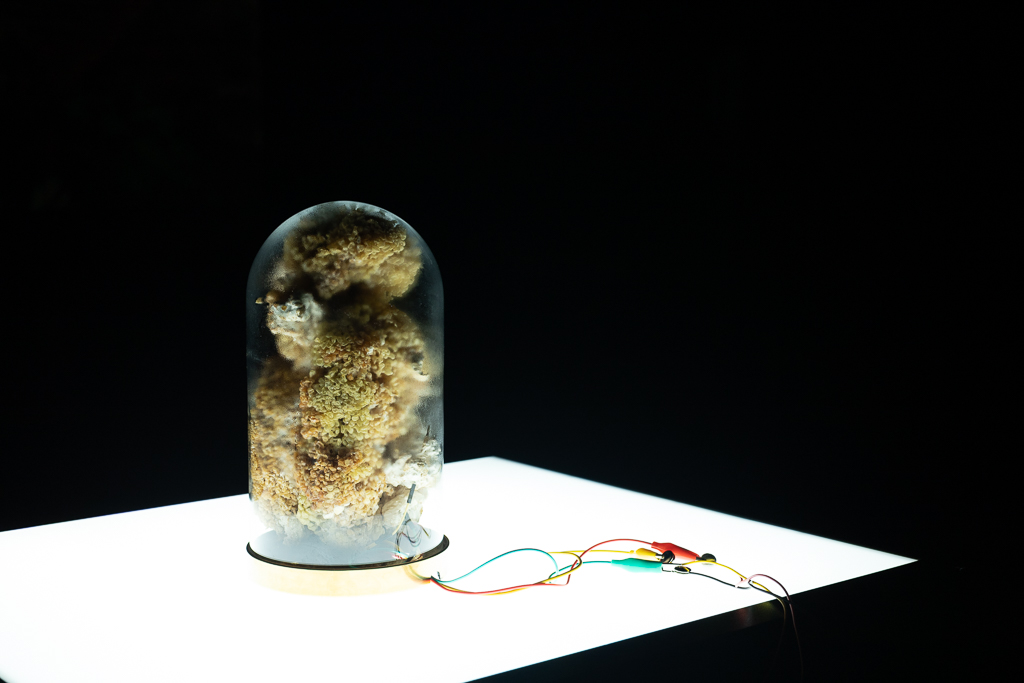
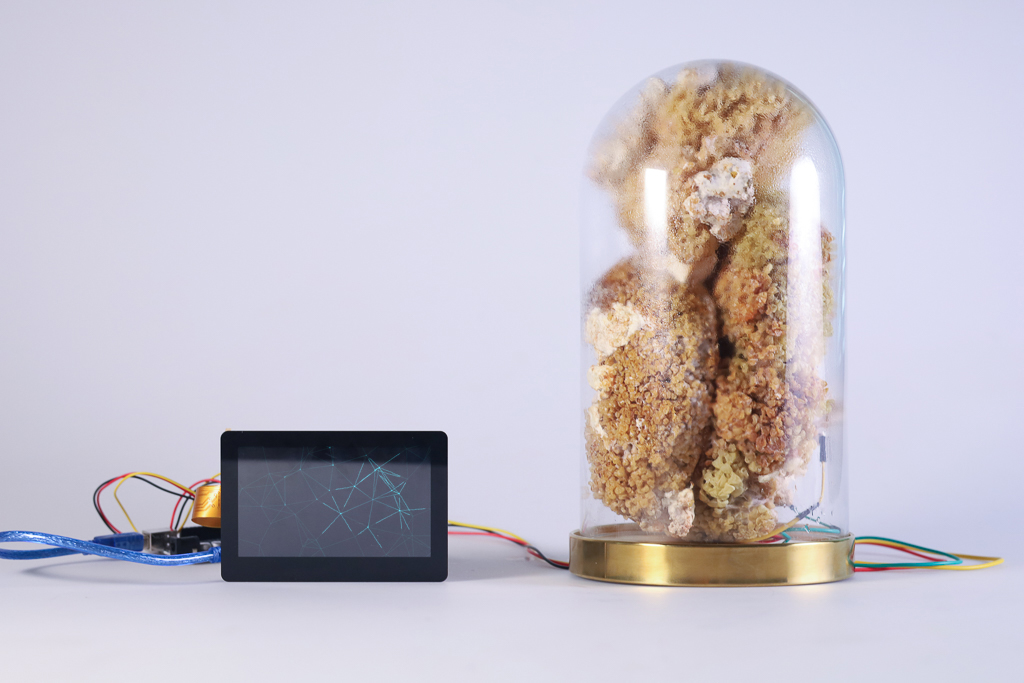
Installation: Mycelium, glass, computer, cables, Bioamp
In 1995, Olsson and Hansson published their findings in The Science of Nature, reporting electrical activity in fungi that may play a role in information transmission, drawing parallels with processes in the human body. This discovery opens up new possibilities for imagination: Do fungi have a nervous system like ours? If so, could their decentralised nature offer new perspectives on what a brain can be?
In the 2020s, Andrew Adamatzky at the Unconventional Computing Laboratory at UWE conducted a series of studies exploring whether fungi could function as a form of computer – an alternative to the artificial brains that are prevalent in the contemporary world. In between, Suzanne Simard highlighted how fungi form extensive networks that facilitate nutrient exchange between trees, playing an important role in communication within forests.
These examples reveal the mysterious capabilities of fungi as a kind of “brain”, both within individual organisms and across species. Their unconventional structures, so different from those of other organisms, invite us to reconsider how we understand intelligence and communication.
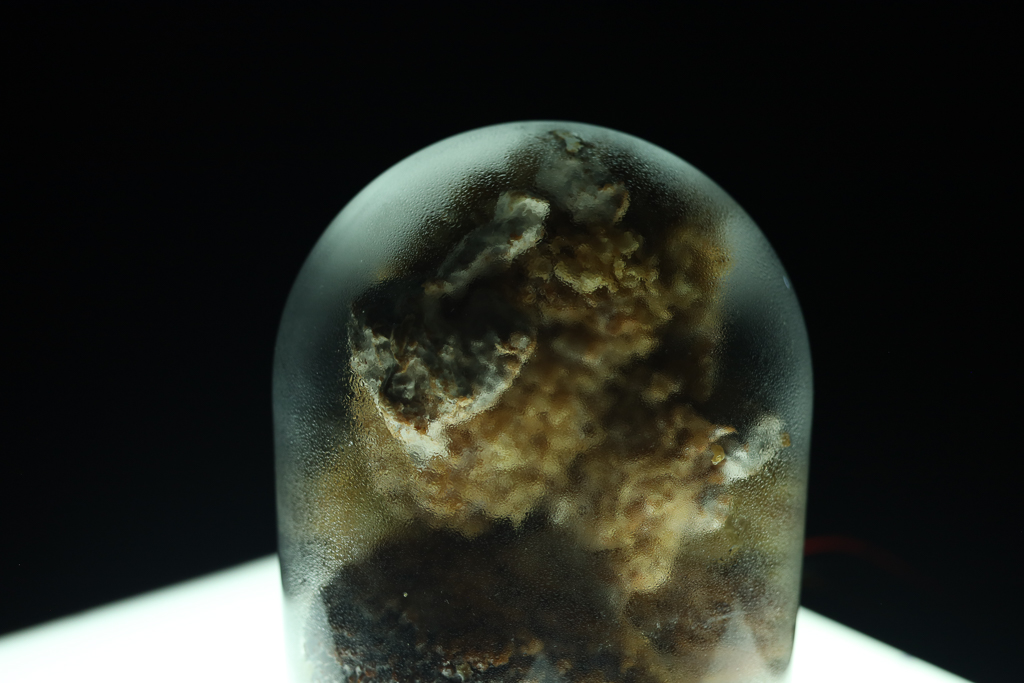
In this project, we cultivated a fungal brain using a sponge as its growing medium. By capturing its electrical activity and transforming it into a visual network, we made its invisible processes visible, revealing a unique and unconventional neural system.