Motivation
This project began with my curiosity about the electrical activity of mycelium and my background in interaction design. Although mycelium has long been explored as an alternative material for sustainable design, it is often approached as an inert material, similar to other conventional materials. However, its nature as a living organism opens up another possibility: to explore mycelium as a “living” material that actively responds and changes.
The electrical activity of mycelium has been investigated by researchers, particularly from computational and biological perspectives. Coming from interaction design, I am especially interested in electricity because it is a fundamental property that we frequently work with when designing interactive systems. This led me to consider whether the electrical activity of mycelium could itself become a material for interaction, not simply as a sustainable substitute for conventional materials, but as a living organism that participates in and shapes the interaction.
Literature Review
Fungi and sensor
Genç et al. (2022) conducted a systematic exploration of a complete set of electronic components fabricated with mycelium. However, their approach primarily focused on exploiting the texture of mycelium as a substitute for plastic components, rather than engaging with the intrinsic electrical properties of the living material itself.
In contrast, the project Physarum Sensor, conducted by Adamatzky and Neil (2017), demonstrates the potential of transforming organisms into functional sensing systems. Building upon this perspective, the Unconventional Computing Laboratory led by Adamatzky has carried out a series of studies investigating the electrophysiological activity of fungi, to explore the feasibility of fungal sensing and fungal computing.
The experiments identified fundamental electophysiological signals mainly in the oyster mushroom, revealing patterns of both high-frequency and low-frequency electrical activity(Adamatzky 2023). In addition, the fruiting bodies were shown to respond to external stimuli, indicating their sensitivity to environmental changes(Adamatzky 2023). For further computational applications, resistance-based experiments were conducted to examine the temporal dynamics of fungal electrical behaviour (Adamatzky et al. 2023). The observed regularity in resistance variation is suggested to be associated with the metabolic activities of the mycelium over time(Adamatzky et al. 2023).
Fungi and vibration
In the Eastern world, there is knowledge from earlier generations suggesting that vibration could stimulate the growth of fruiting bodies. One example can be found in Tong Ya, which describes a traditional method of growing mushrooms on tree trunks:
平西有㫁椿榆構斧其皮久雨爛之以米潘沃之雷則出蕈矣不雷則大斧擊之而蕈亦出
This passage describes how mushrooms could appear after trees were exposed to rain and vibration from thunder. If there was no thunder, the tree could be struck with an axe to stimulate mushroom growth. The original text is from Wurui Bian and was difficult to read because it was written in an old form of Chinese script.
Regarding the relationship between vibration and fungi, existing research was reviewed using keywords such as “vibration” and “sound” for vibration, and “fungi”, “mushroom”, and “mycelium” for fungi. Most of the research discusses mycelium as a material for sound absorption. The studies that discuss the relationship between vibration and fungi mainly focus on vibrations generated during the transportation process and how they influence the quality of fruiting bodies in commercial production.
Although there is not much research on this topic, some studies have examined how vibration influences fungi. Fungi exposed to vibration have been reported to grow faster than those without vibration (Harris et al., 2021; Hofstetter et al., n.d.; Robinson et al., 2024). Furthermore, vibration can influence metabolic processes depending on its frequency (Harris et al., 2021). Robinson et al. (2024) suggest that this may be related to piezoelectricity, where vibration generates electrical activity that could stimulate fungal growth. Although the research subjects were neither oyster mushrooms nor typical fungi used in this project, these studies still provide a useful starting point for further research.
Project development – Version 1
The initial plan was to create an interactive installation in which participants could interact with the system through the electrical responses of mycelium itself. Therefore, the first step was to understand what kinds of actions or environmental changes could induce measurable electrical changes in mycelium.
To investigate this, it is needed to develop a method for measuring and collecting its electrical activities. Choosing an appropriate measurement method became a crucial part of the project, as it directly influenced what kinds of activities could be measured, which tools could be used, and ultimately what kind of device could be designed.
A series of measurement methods and tools was therefore developed and tested. Eventually, potential difference measurement using contact electrodes was selected for the first version of the project.
Through this process, however, the focus of the project gradually shifted. Rather than simply developing an interactive installation based on the electrical responses of mycelium, it became more focused on how participants could encounter and perceive mycelium, and, more broadly, other living organisms that are often positioned outside human-centred definition of life. The final device was therefore developed as a way for participants to sense the invisible electronic activities of mycelium and plants. Instead of approaching these organisms primarily as resources for human use, the project invites participants to encounter them as other living entities.
Measurement tools development
A device was developed for the preliminary measurements of this project. A series of measurement methods and electrode configurations were examined. The selection of methods and components was based on the practical requirements of an art installation, as well as the availability of components and the technical possibilities accessible to an interaction designer.
Measurement methods
A common approach in interaction design for detecting a material’s response to environmental stimuli is to measure changes in its resistance or impedance. A voltage divider is one common method for achieving this. A DC or AC voltage is applied across the material, with a resistor connected in series. By measuring the voltage across the material, changes in its resistance or impedance can be estimated.
Another approach is to measure the potential difference between two locations on the material. Since these voltage differences can be very small and susceptible to electrical noise, additional components are often required to filter and amplify the signal. For this project, BioAmp module, a ready-made solution for measuring bioelectrical signals, such as EEG and ECG, was used.
Electrodes
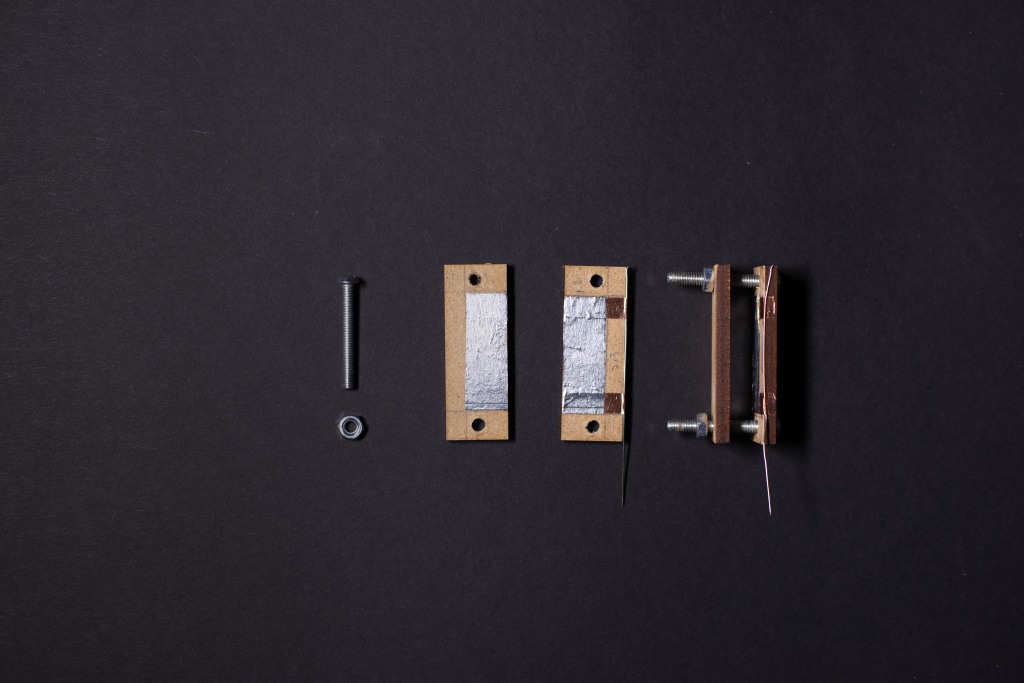
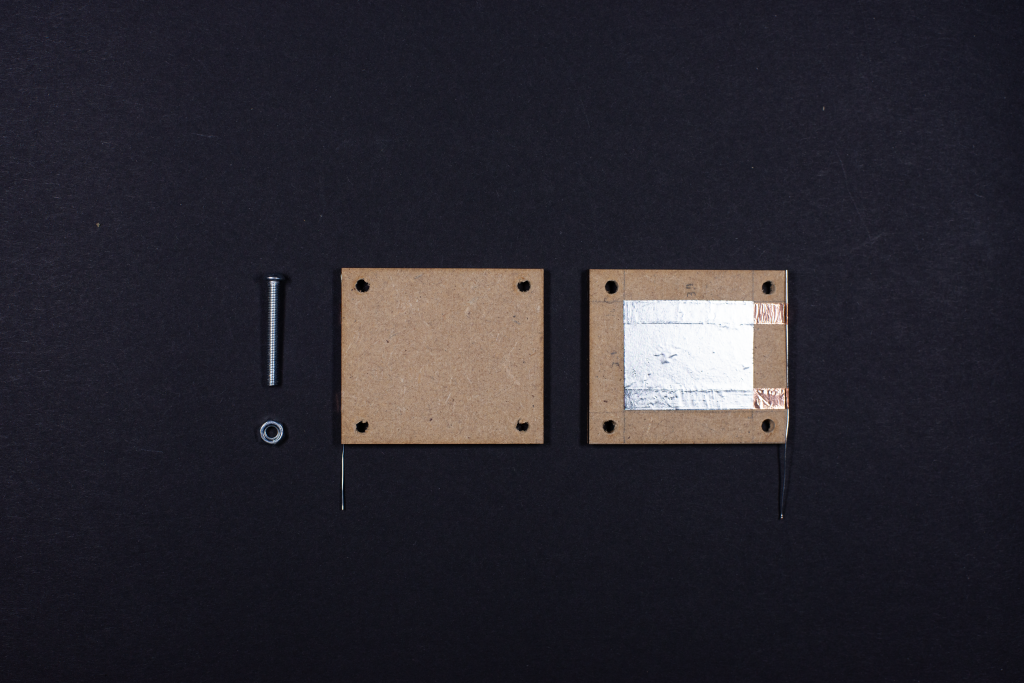
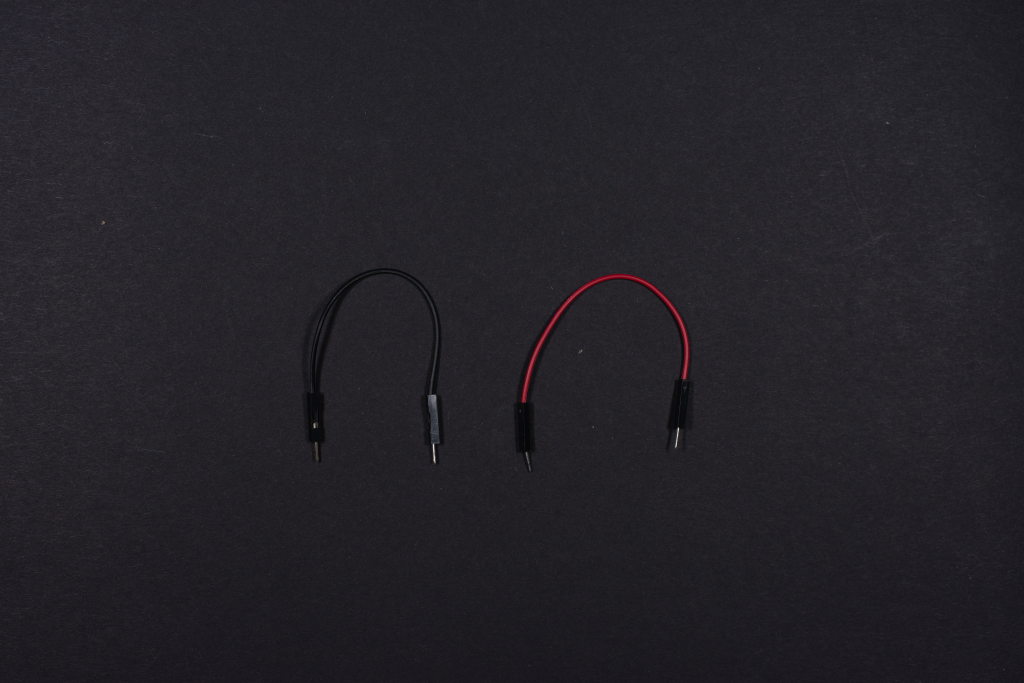
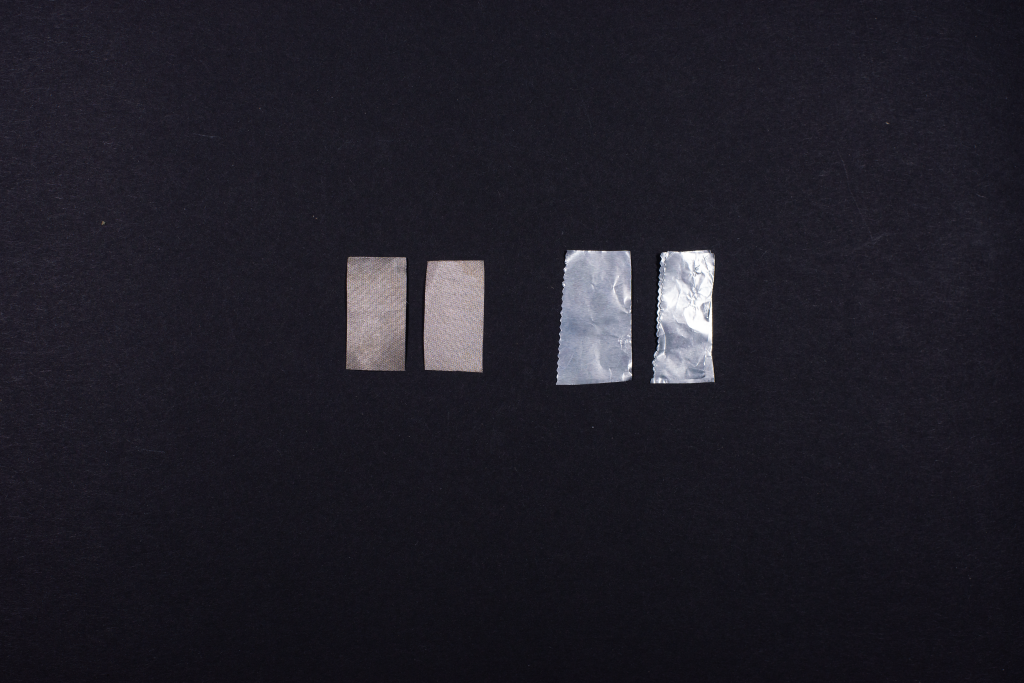
To receive electronic signals, different types of electrodes were examined based on the data requirements and their usability in the final product: a series of clamp electrode, needle electrode (Dupont wires), surface electrode (conductive cloth and foil).
The clamp electrode is a customised MDF board with foil placed between two layers. The MDF boards were tightened with screws. Wires were attached to the foil and connected to the Arduino to receive data. This electrode was designed for flat mycelium that could usually be collected on the surface of the culture. The clamp electrode was attached to the edges of the mycelium, making it suitable for testing resistance and impedance.
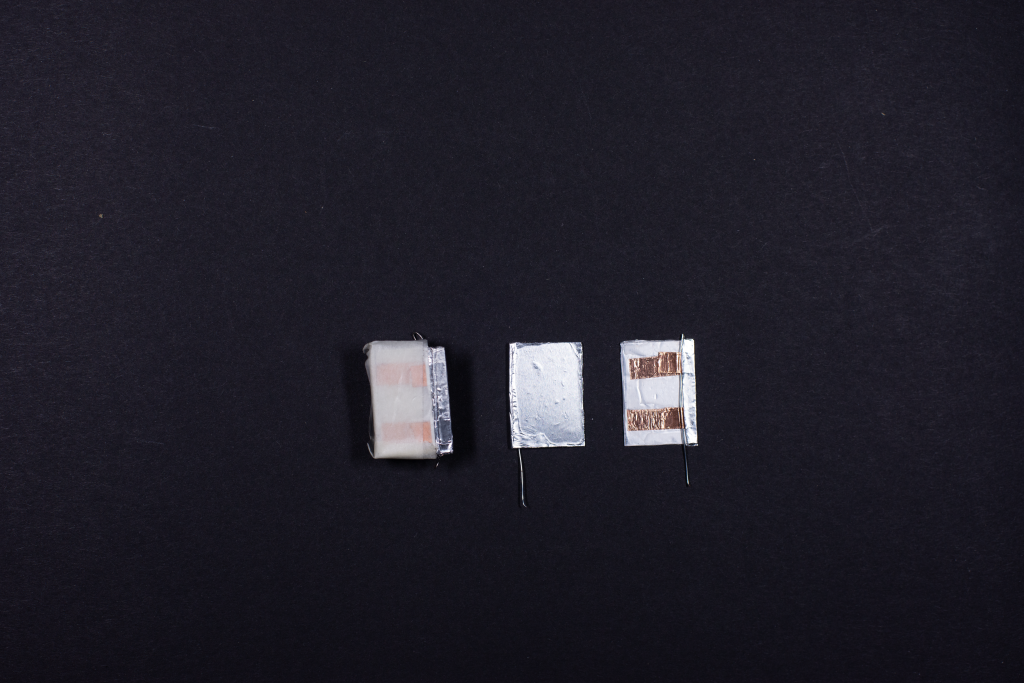
The following types of electrodes were mainly designed for measuring potential differences, while providing different contact surfaces for the mycelium. Surface electrode using conductive cloth and foil, were attached to crocodile clip. A bio-glue made from starch was applied between the electrodes and the mycelium to create a stronger attachment.
Device development
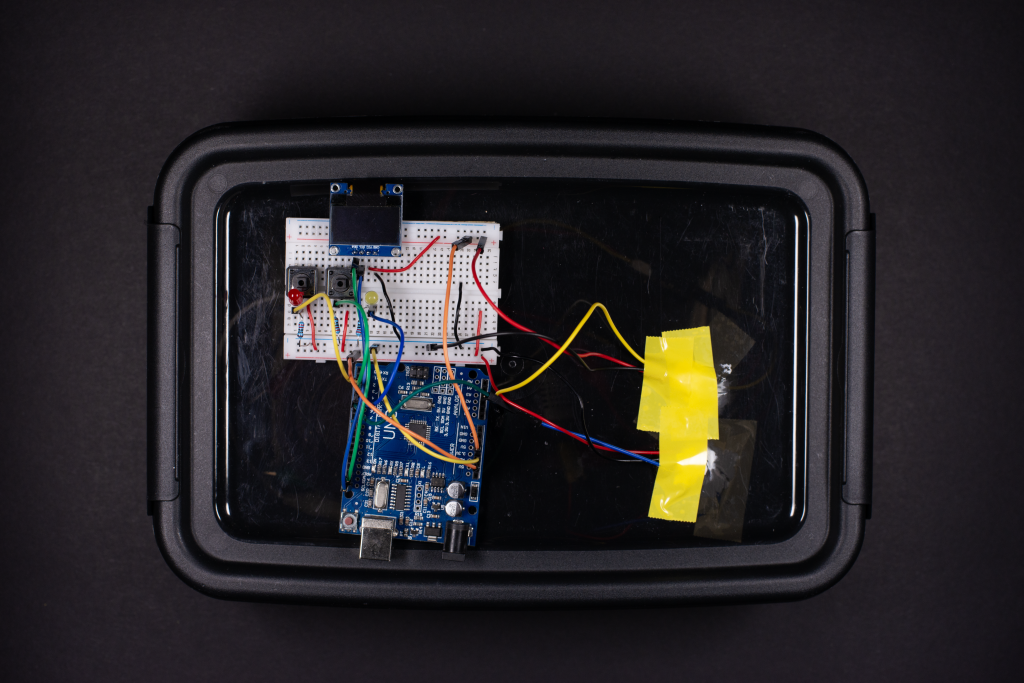
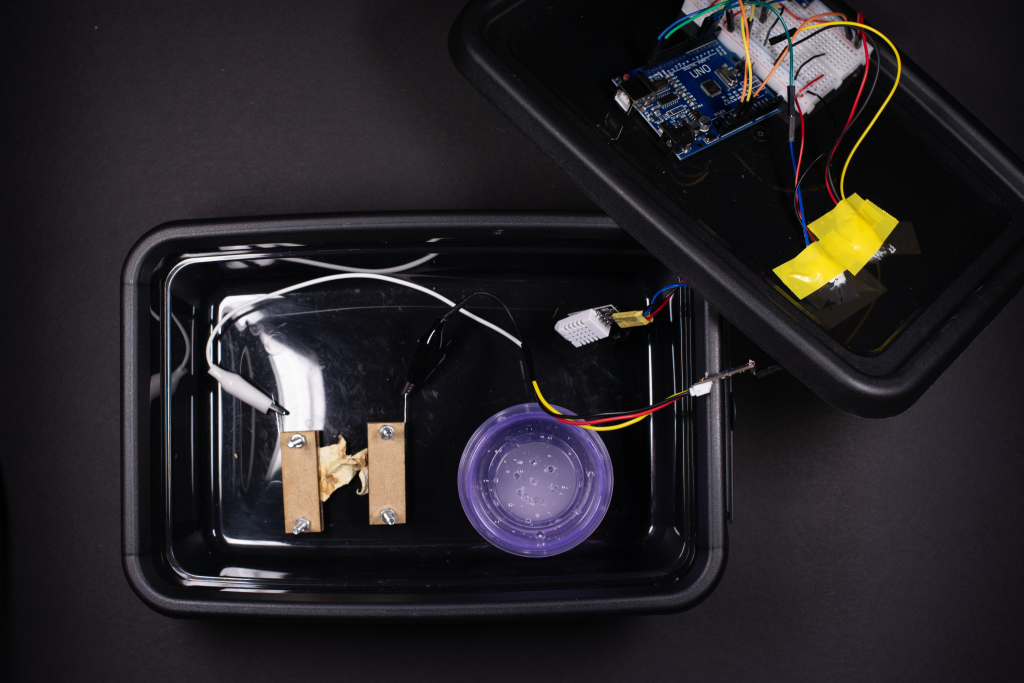
In order to create a stable measurement environment, a sealed box with a moisture-control container was made to prevent changes in humidity. It also provided the same setup for each experiment.
For more efficient testing and observation of environmental changes, a set of function buttons, LED indicators, and a monitor were also built into the setup.
Signal analysis
First examination
Based on the preliminary study, temperature and humidity were identified as the major factors influencing mycelium. The three methods were planned to be examined under three different temperature conditions and three different humidity conditions.
| Temperature | Selected Reason | Humidity | Content in moisture-control container |
| 15 | Outdoor temperature | 35 | Natural humidity in Zurich |
| 25 | Indoor temperature | 50 | Water |
| 30 | Temperature in summer | 90 | Water with salt |
Although the conditions were tested for stability, it was harder than expected to maintain stable humidity. The humidity maintained by each moisture-control container changed under different temperature conditions. Therefore, it became a dynamic process to examine different humidity conditions and obtain comparable results.
In the end, three temperature conditions were collected: 17°C, 26°C, and 31°C, all at 35% RH. Humidity data was only collected at 26°C, with three separate conditions: 35% RH, 50% RH, and 90% RH. The temperature and humidity values were defined as the average temperature and average humidity during each experiment and a small amount of difference within 2 degree and 2% was allowed.
For the AC current used to measure impedance, the frequency was set to 1000 Hz. To prevent polarisation, DC current was sent in both directions.
For the data analysis, the following parameters were examined: AC impedance; the mean and standard deviation of the DC signal; the FFT peak and FFT range of the DC signal; and the FFT peak and FFT range of the BioAmp signal.
| Temperature | Humidity | ||
| AC | Impedence | No significant correlation | Spearman significant negative correlation (higher humidity, lower resistance) |
| DC + | mean | No significant correlation | Pearson significant negative correlation (higher humidity, lower resistance) |
| Standard deviation | Pearson significant negative correlation (higher temperature, higher resistance) | Pearson negative correlation, but not statistically significant (higher humidity, higher resistance) | |
| FFT peak | No significant correlation | No significant correlation | |
| FFT range | No significant correlation | No significant correlation | |
| DC – | mean | Pearson positive correlation, but not statistically significant (higher temperature, lower resistance) | No significant correlation |
| Standard deviation | Spearman negative correlation, close to significance (higher temperature, higher resistance) | No significant correlation | |
| FFT peak | No significant correlation | No significant correlation | |
| FFT range | Pearson significant negative correlation (higher temperature, lower frequency) | Spearman positive correlation, but not statistically significant (higher humidity, higher frequency) | |
| Bioamp | FFT peak | Spearman significant positive correlation (higher temperature, higher frequency) | Pearson significant positive correlation (higher humidity, higher frequency) |
| FFT range | Spearman positive correlation, but not statistically significant (higher temperature, higher frequency) | No significant correlation |
There were no very clear tendencies in the different parameters, probably because there were not enough repetitions in the experiments. As a side experiment, the response of mycelium to different vibrations was also examined. However, no relevant patterns were found in the data.
Second examination
The failure of the first examination led to a reconsideration of the strategy. The second examination focused on quick testing and interaction.
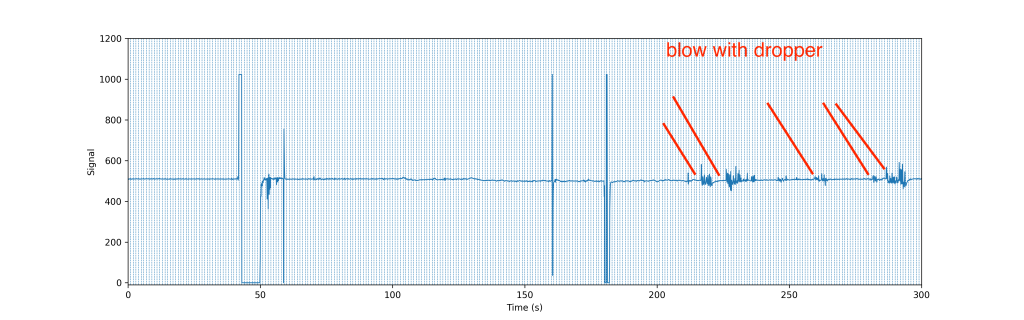
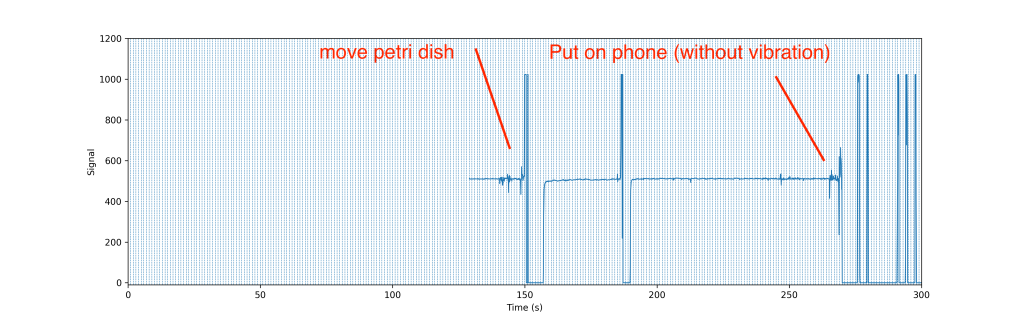
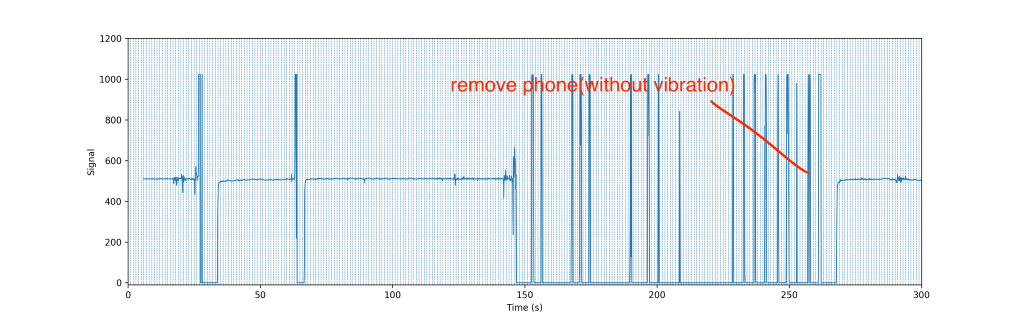
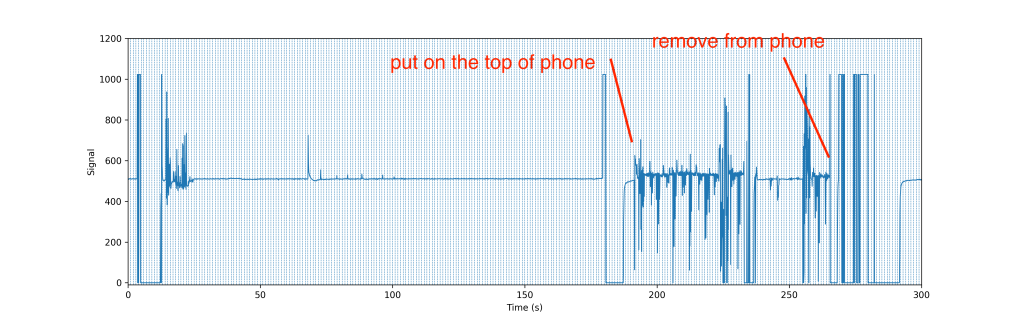
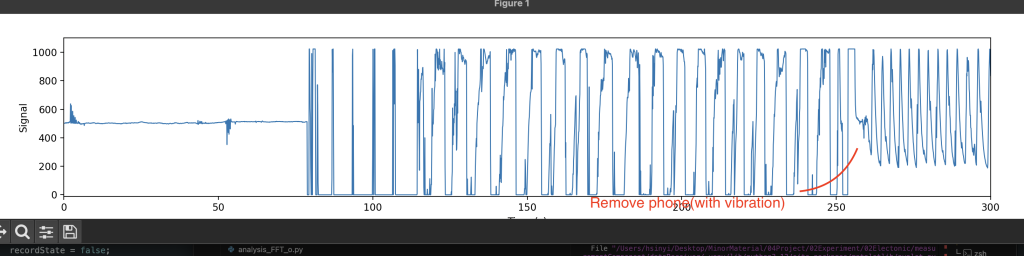
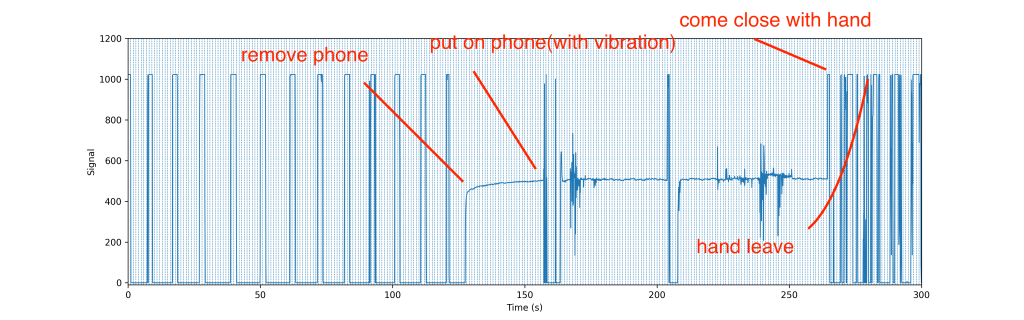
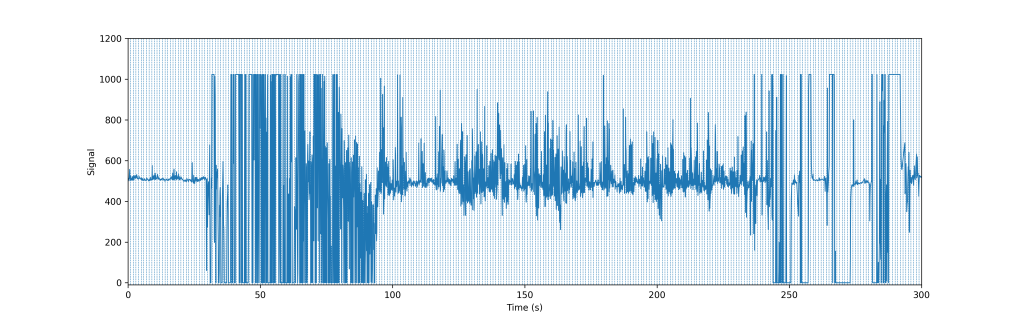
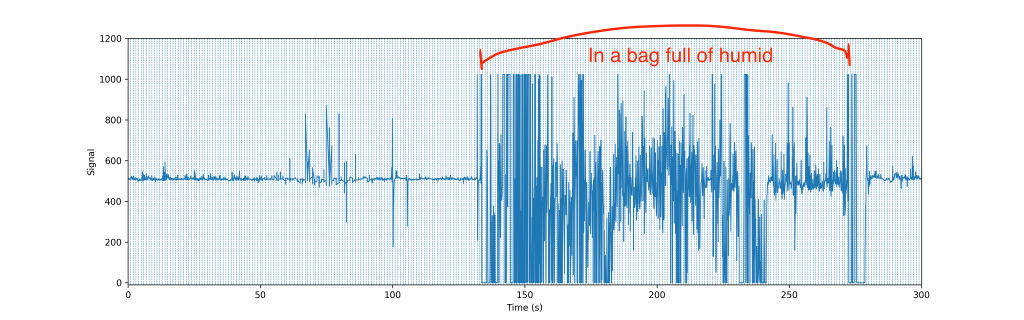
Potential difference was selected as the main signal, since it reflects the metabolic activity of mycelium. An observing environment was created, with a diagram of the BioAmp data displayed through the window. This allowed any bio-reaction of the mycelium to be observed in real time.
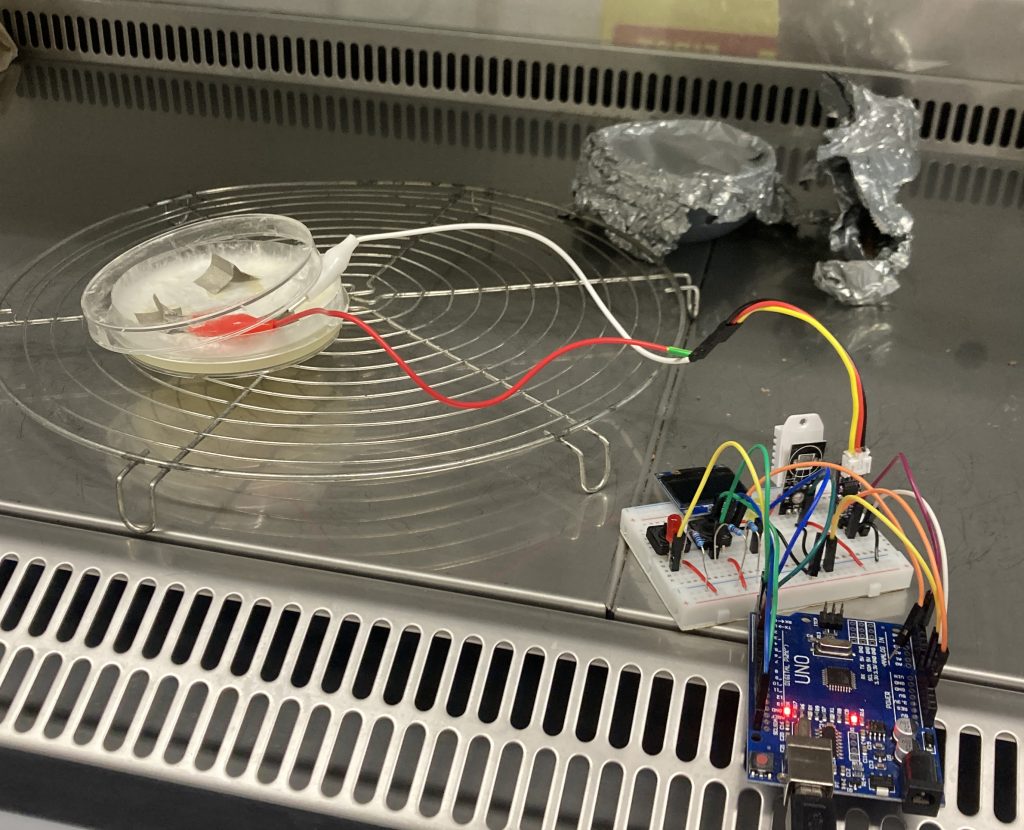
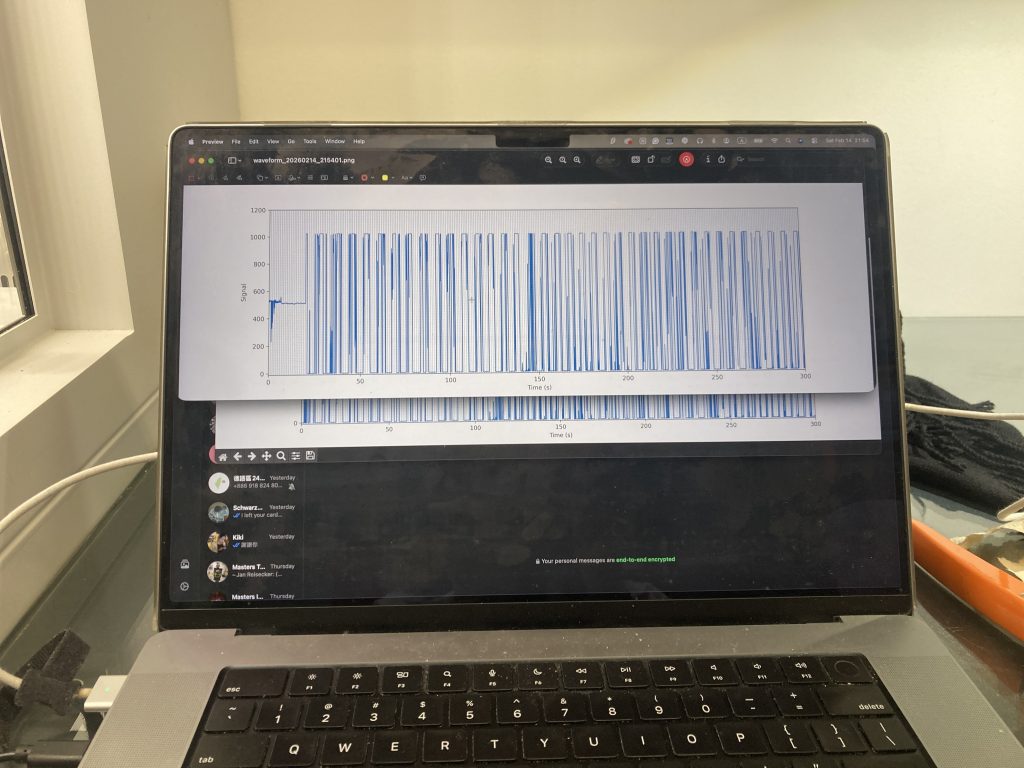
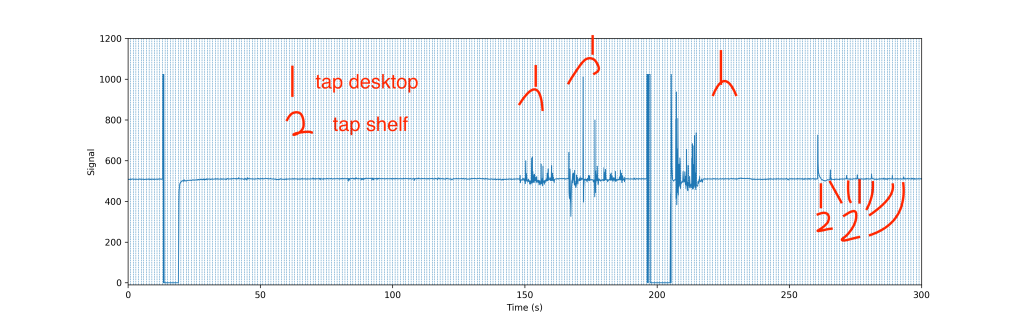
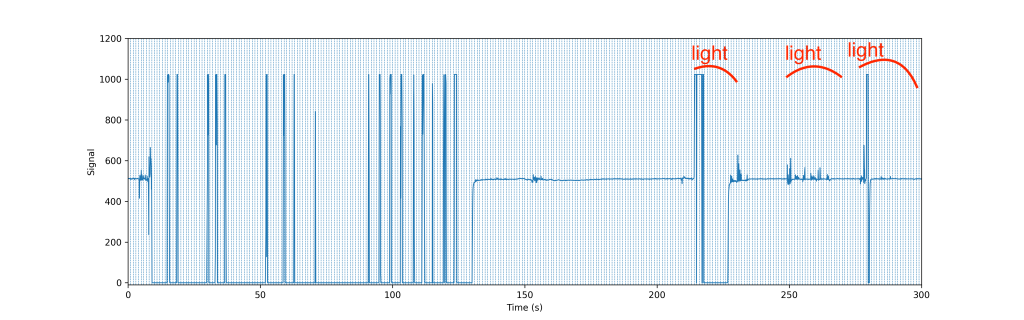
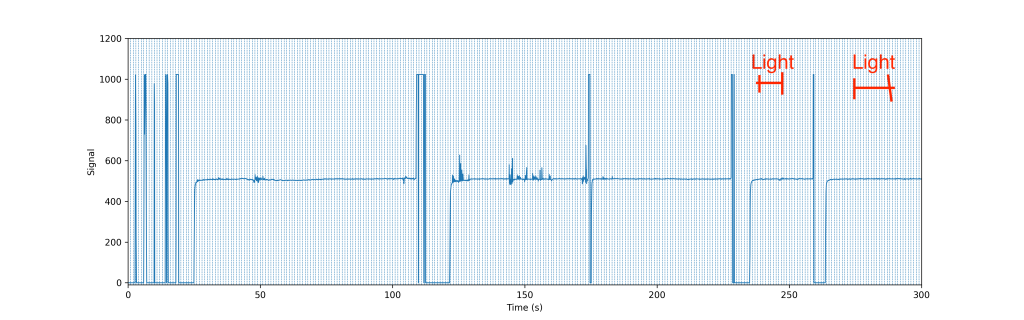
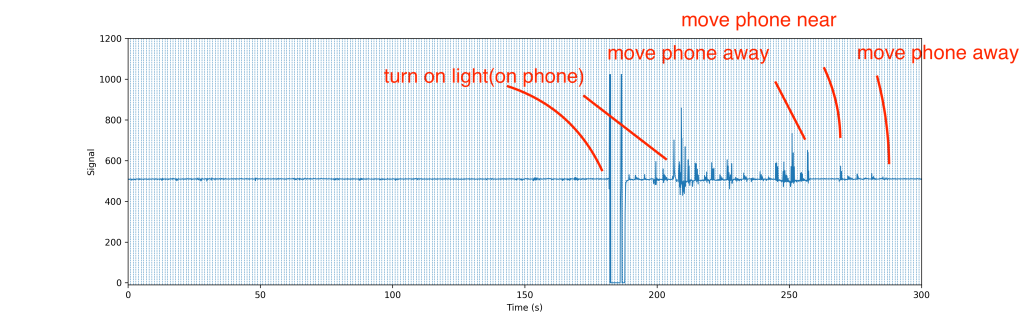
There were two typical patterns in the BioAmp signal from mycelium. One showed strong and continuous changes, which were probably the natural fluctuations of the mycelium. The other showed a calmer signal, with only small changes over time.
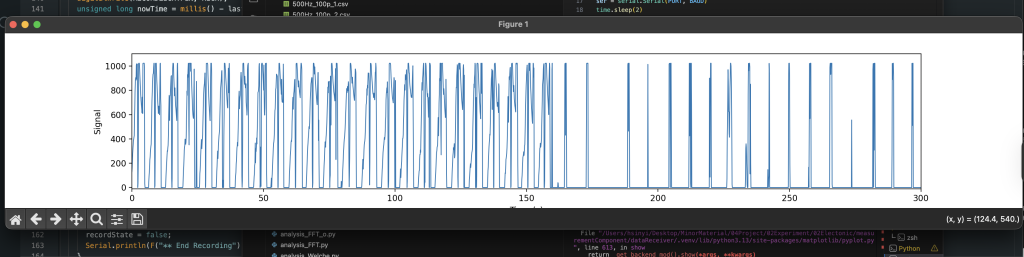
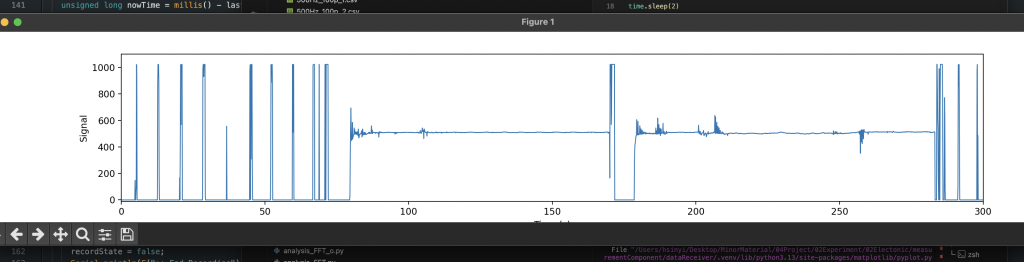
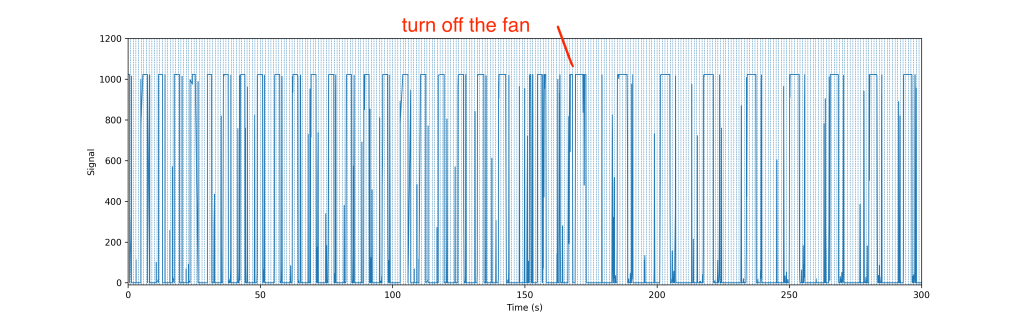
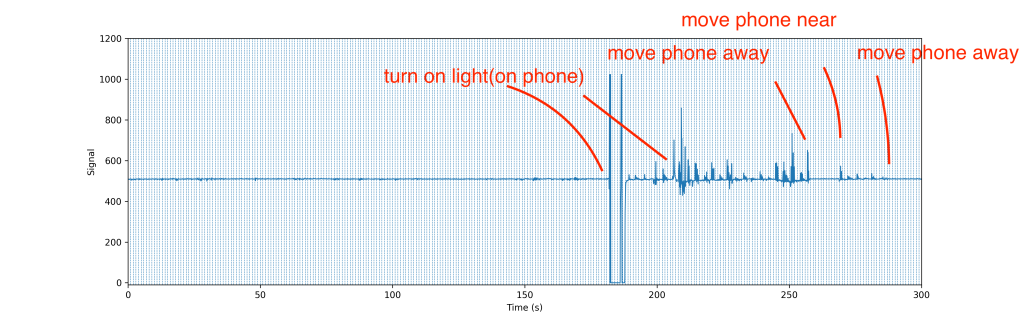
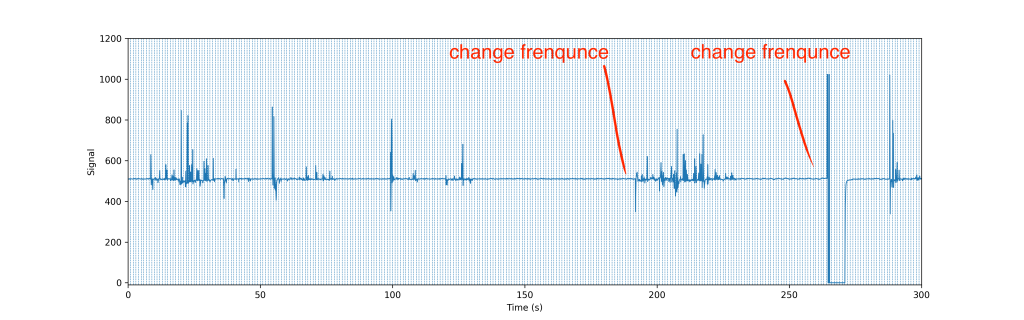
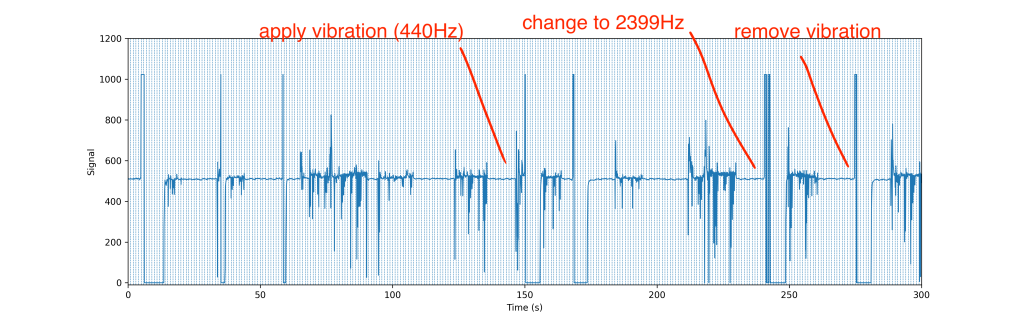
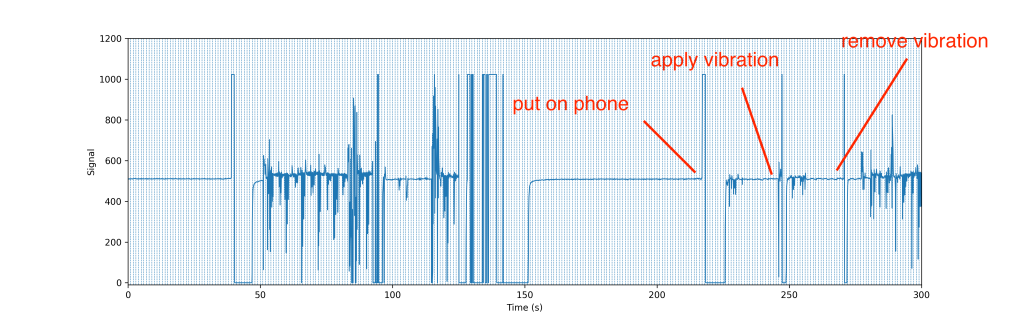
The response of the BioAmp signal to different situations and interventions was explored, including environmental changes, vibration, light conditions, physical intervention, cell phone distance, and changes in humidity. Among all the tests, changes in humidity produced the most reliable response.
Prototype
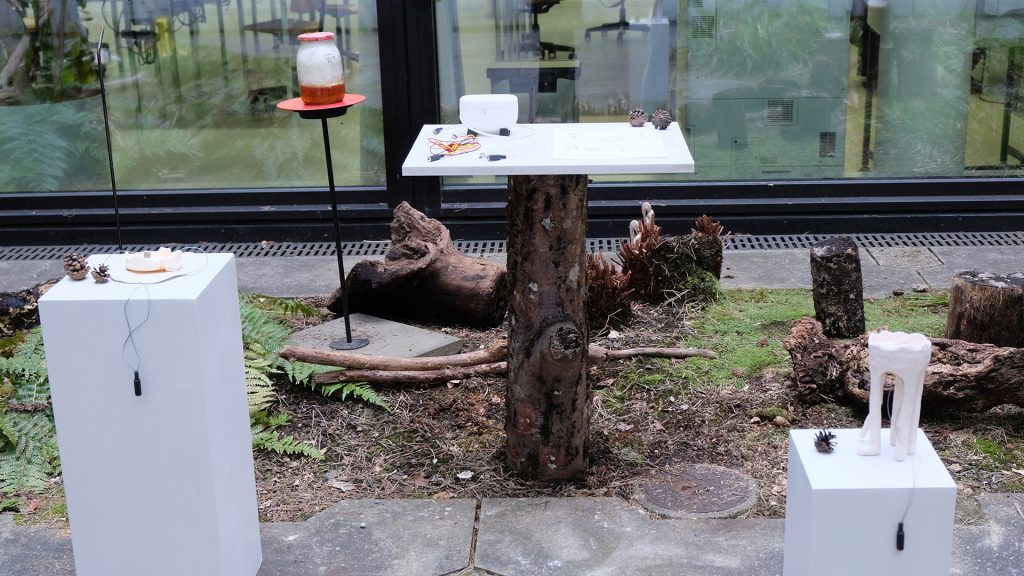
Although it was interesting the idea in the beginning, it wasn’t sucessful to find a meaningful action for interaction experience. However, the process of measurement was a way to build connection, enhance engagement, and deepen the understanding of mycelium. I found it’s interesting to rebuild the relationship of human and creature in this way, so the first prototype was a machine to show the invisible biomotalic activities of a material. This device has a visual feedback which was mimicking the breath of the objects. A set of electrodes was made for different types of attached surface.
The project was exhibited on the Material Walk in ZHdK. The outcome please refer to project Symbiotic forest.
Project development – Version 2
In the second version, the feedback device was changed into a more natural form. Since sound and visuals are common ways of transforming electronic signals, vibration was considered as another way to create feedback in this project.
For creating vibration feedback, a simple way is to use a vibration actuator. However, the possibility of using a natural material was a more appealing option. Starting with the mechanism of a speaker, several materials were examined. In the end, a grassland-like board with a coil and a glove with a magnet were created.
Knitting Vibration Actuator Development
A common way of producing sound with a speaker is by using electromagnetic induction. When an electric current flows through a wire, it creates a magnetic field. Therefore, a force can be created by placing a wire carrying current in another magnetic field. This force creates vibration, which pushes the air and generates sound.
The advantage of experimenting with this method is that each part can be replaced with different fabric materials. For this project, only vibration is necessary. Different materials and shapes were examined to maximise the vibration and minimise unwanted effects caused by the current or the interaction between the current and the magnetic field.
Knitting – Conductive Cloth
The first attempt used conductive cloth as the coil, with yarn as the supporting material. This combination of materials made it possible to create a speaker made entirely from fabric.
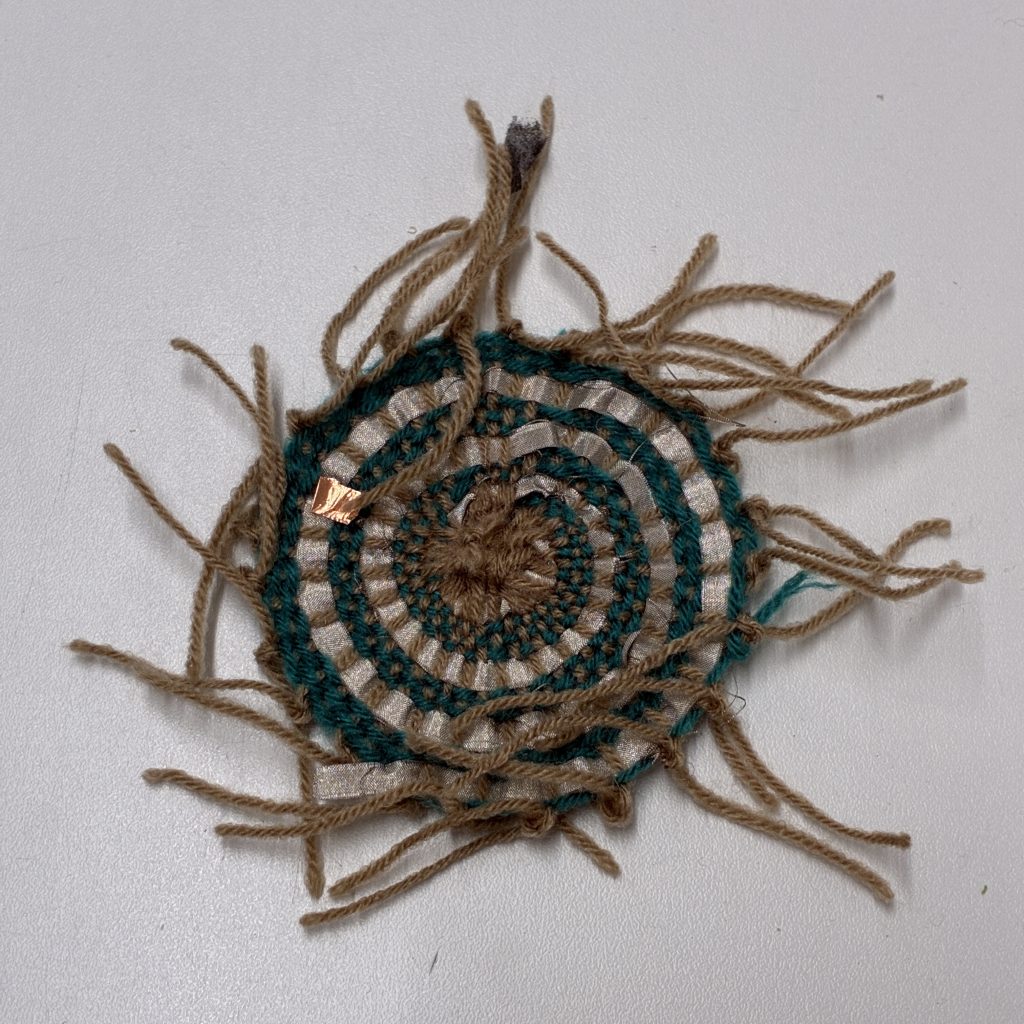
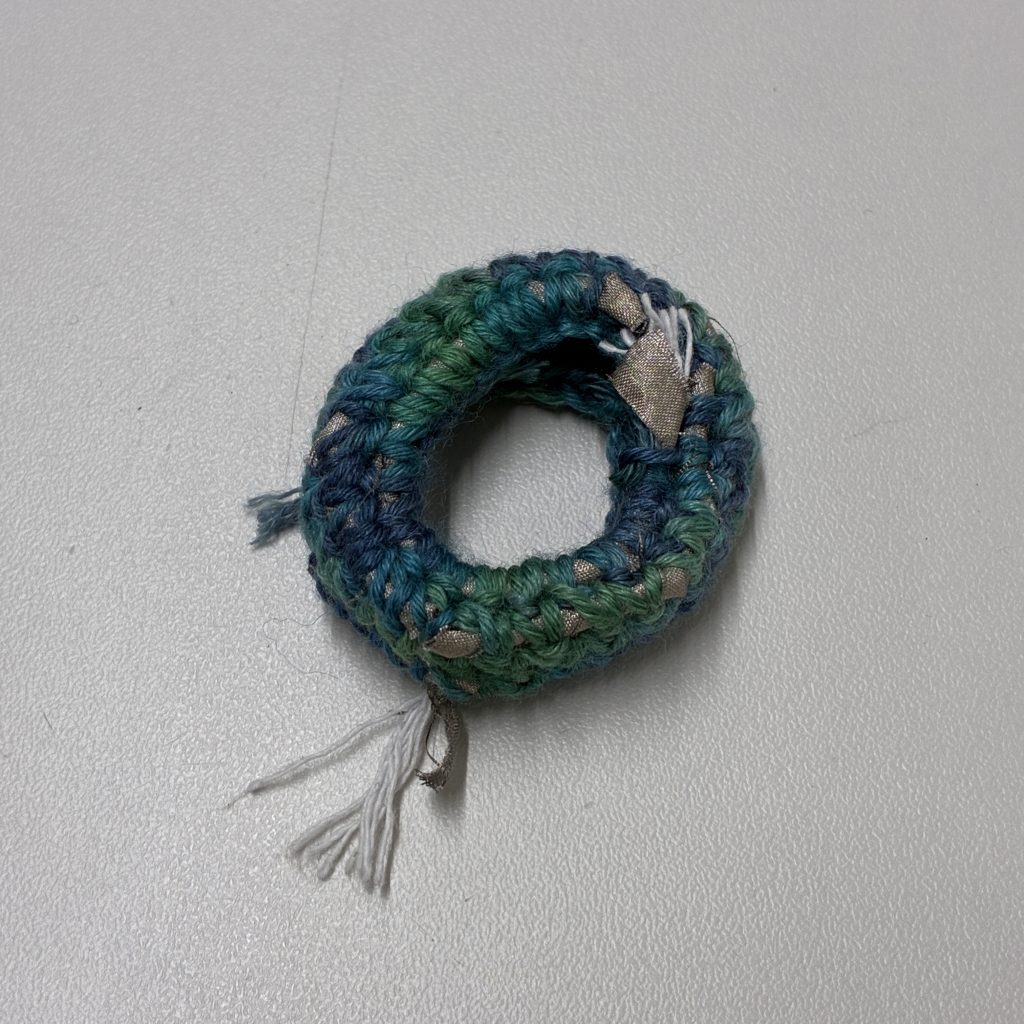
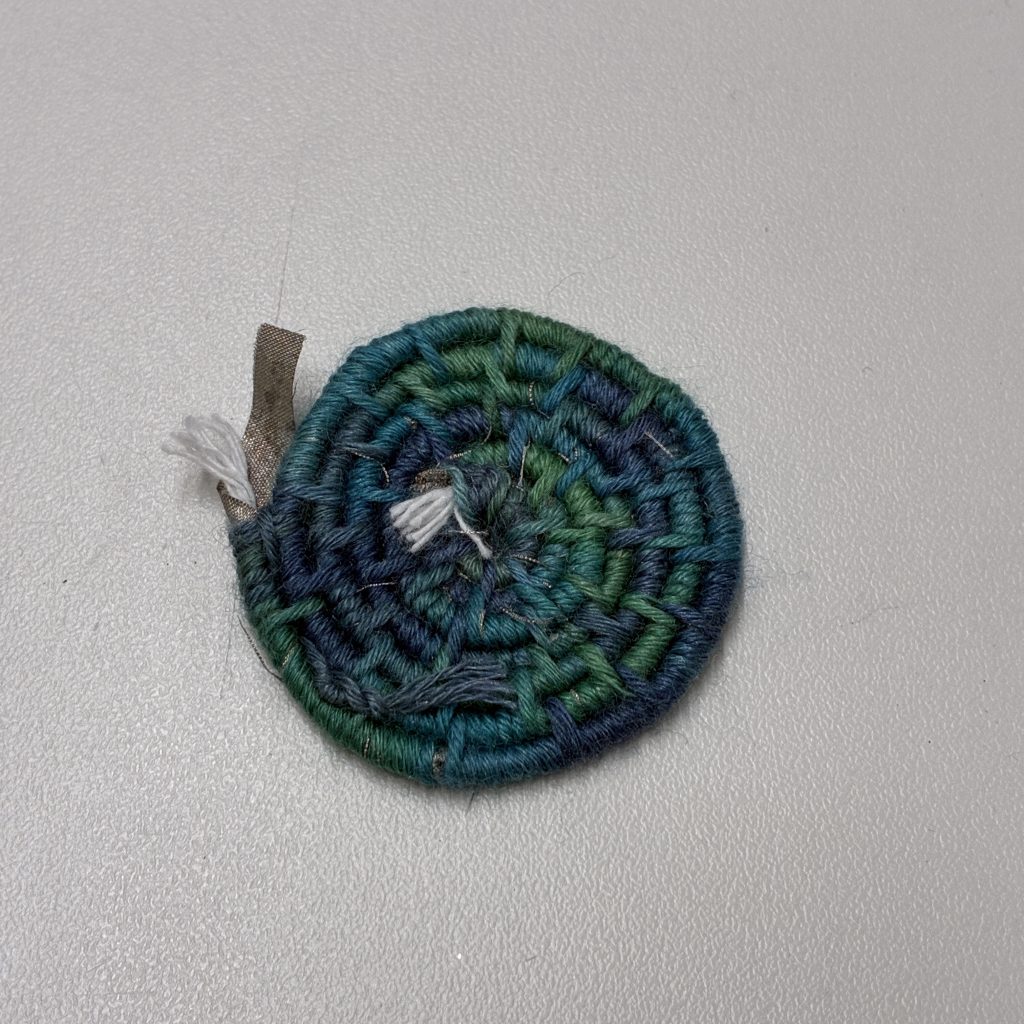
Although small amounts of sound were created, most of the energy was transformed into heat in these experiments. The yarn retained the heat, so it started to become hot very quickly, within several seconds.
Sewing – Conductive Tape and Cloth
Due to the overheating problem, a new series of experiments was conducted to test different coil materials without knitting. A thread of conductive cloth sewn onto the fabric and conductive tape arranged in a spiral shape on the fabric were examined. However, none of these methods achieved the expected result.
Knitting – Hard Wire
A normal wire was examined as well. The plastic coating of the wire was peeled off, and the same method as in the previous knitting experiments was applied using a delicate technique.
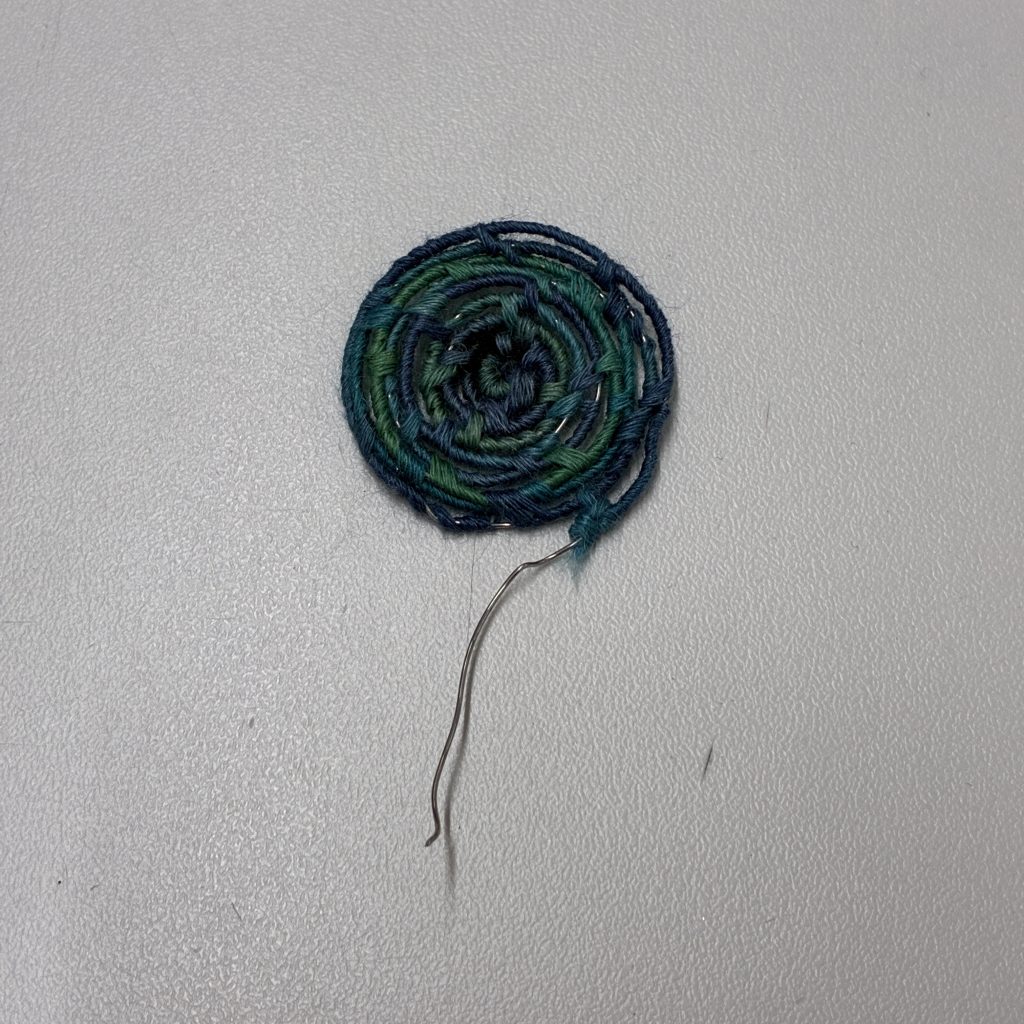
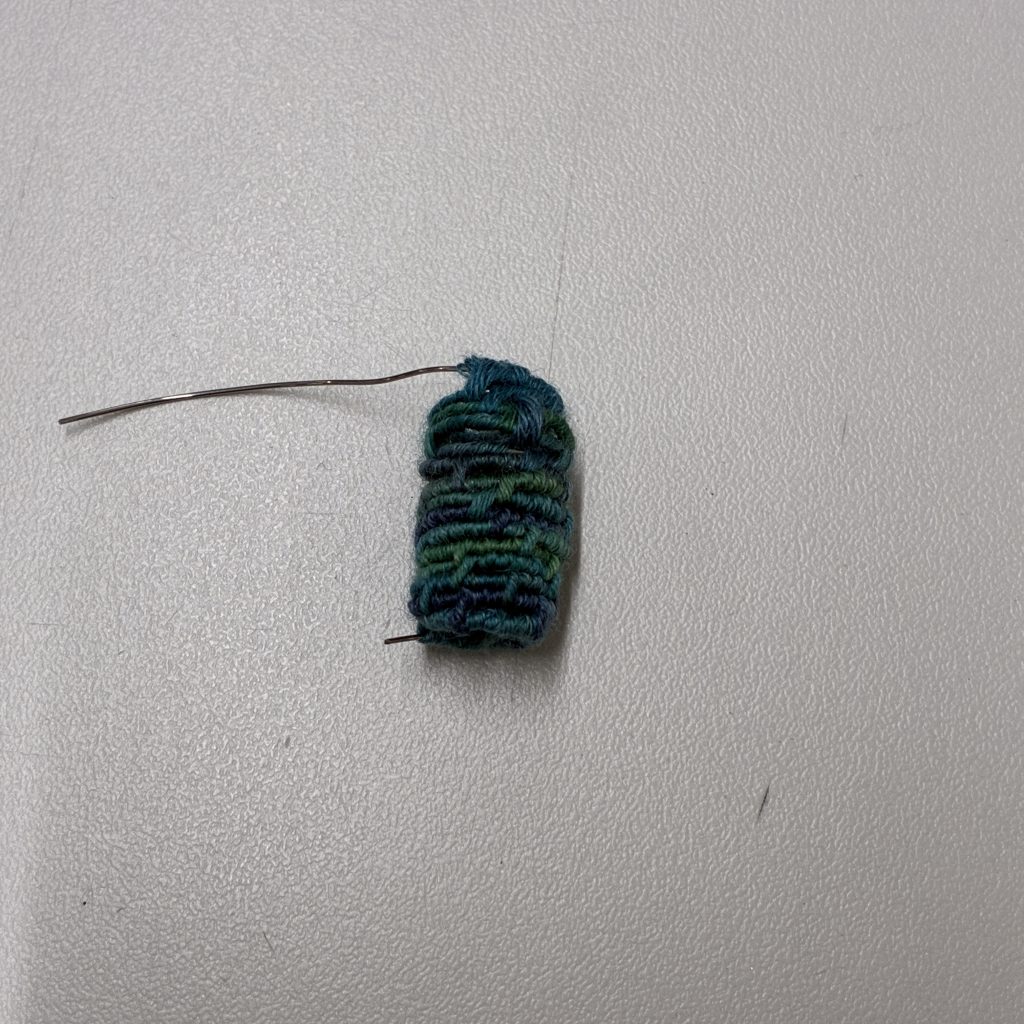
As a result, vibration and sound were successfully generated, especially with a strong magnetic field. However, the wire overheated and started to smell after only a few seconds. The yarn’s ability to retain heat was too high for this purpose.
Knitting – coil
Finally, to create enough force with less heat, a normal coil was used with yarn tangled around it. It worked well even with a small magnetic field.
Prototype
After proving the concept, a prototype was built for the interactive experience.
The project was thought of as a way to build a connection between humans and non-human beings, especially those that are not considered to have the same hierarchy as humans. The interaction was planned as a way to touch the living signals from these beings and feel the life and voice of others.
A glove and an interactive plate were therefore planned.
Magnet Glove
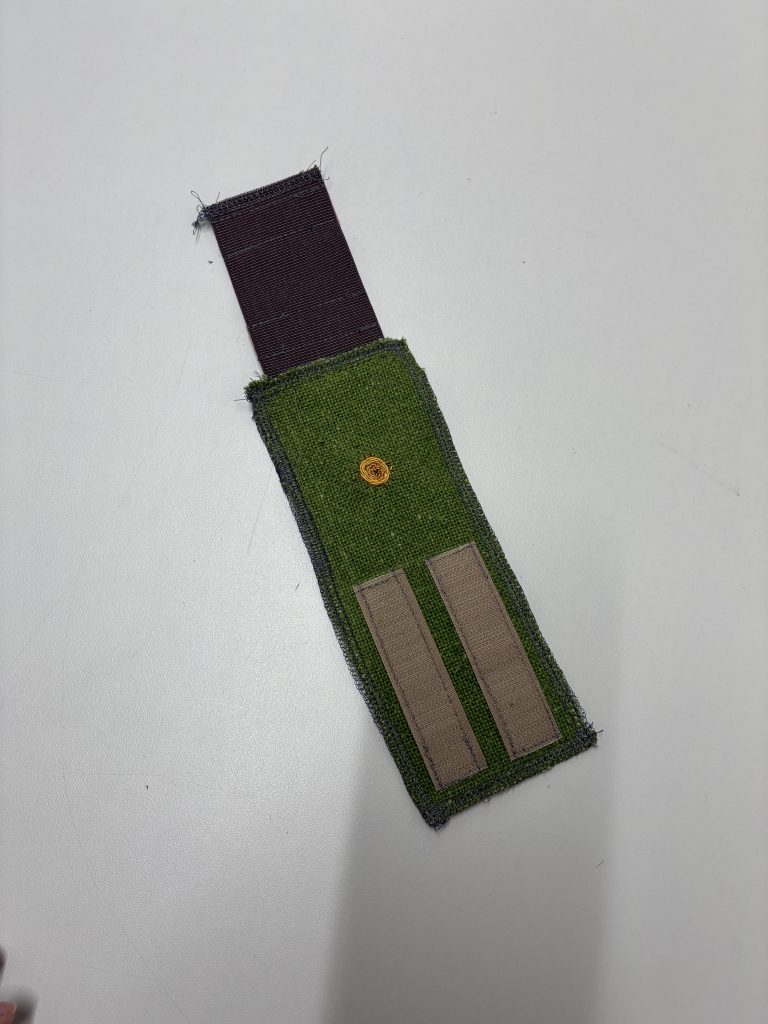
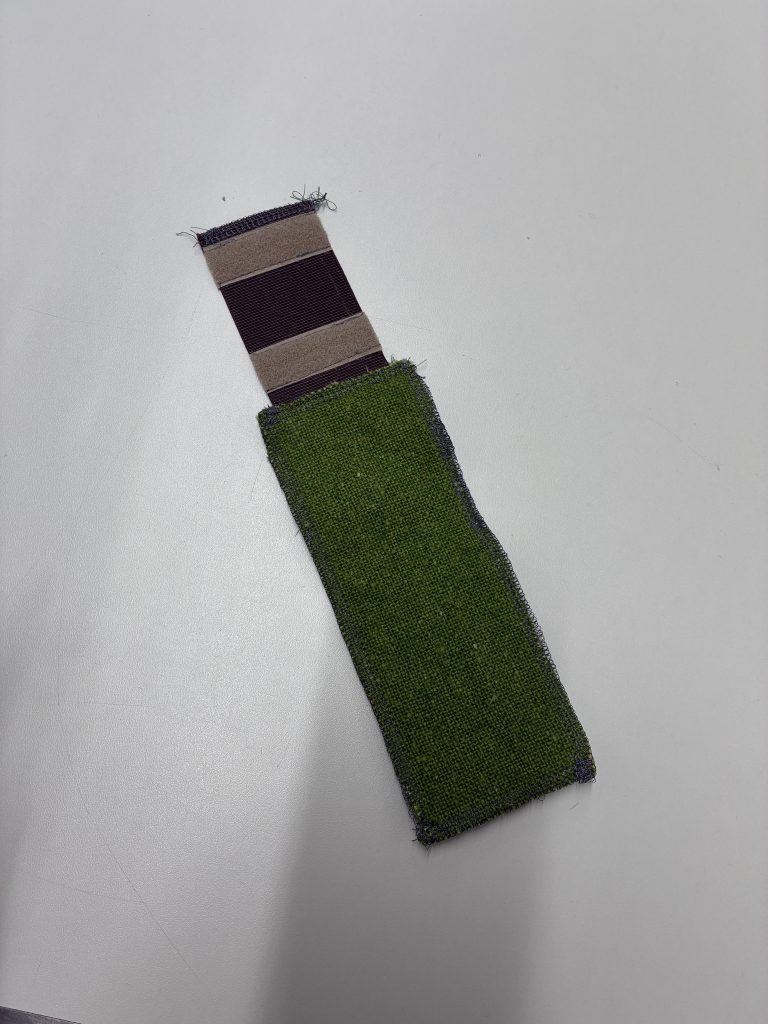
Three versions of the glove were developed to create a suitable glove for different palm sizes. The first version was a fixed glove with a binder. The following versions used a self-adhesive structure, with improvements to the appearance.
Version 1
Version 1 was made of a piece of cloth with a magnet, together with a fixed elastic band. Although it was simple and easy to wear, its ability to fit different hand sizes could be a problem. For smaller hands, the glove could be too loose to sense the vibration clearly. For larger hands, it could be too small to wear comfortably.
Version 2
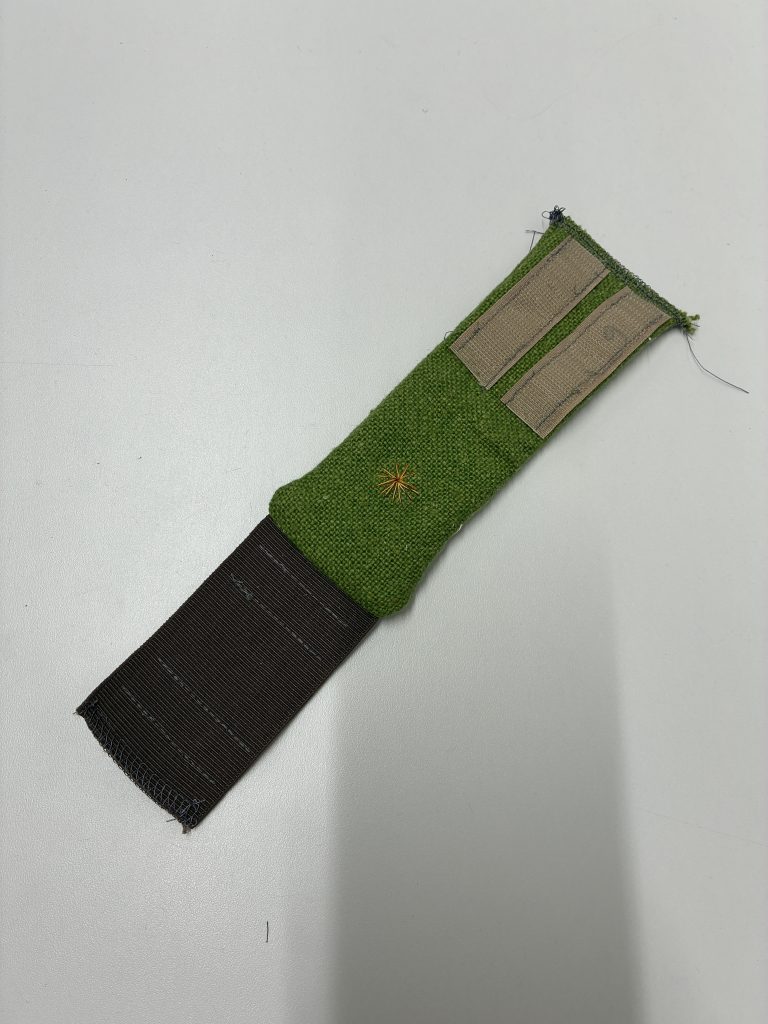
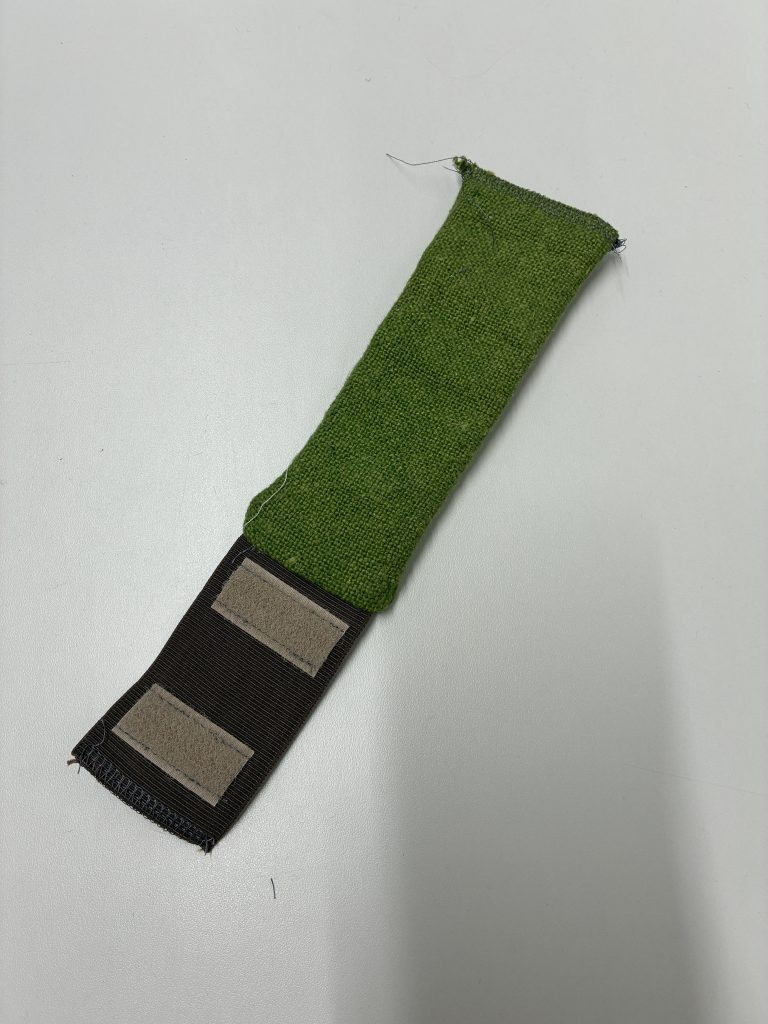
Version 2 changed to a size-adjustable glove, using an elastic band and Velcro.
Version 3
Version 3 used the same design as Version 2, but was sewn differently to adjust the thickness of the glove.
Interactive Plate
Two types of cloth were examined to find which one could receive the vibration most effectively. A hard cloth produced better results than a knitted cloth.
Final Outcome
The final hardware setup includes the fabric-electronic parts, an amplifier, Raspberry Pi 5, and BioAmp, then together with plants. The custom electrodes from Version 1 were reused, and a new type of electrode was created for thin and pointed plants. A custom acrylic plate was made to organise all the cables and components. Mycelium and linen were selected because of their common usage as design materials.
For the software, the signals collected by the BioAmp were sent to Pure Data through the Seeeduino XIAO. Signals from linen and mycelium were collected and processed in Pure Data, and then sent to the fabric coil through the amplifier for output.
When participants wear the glove and align the magnet with the coil, vibration is created through electromagnetic force. Since both the coil and the magnet are attached to a hard cloth, a small amount of sound is also produced.