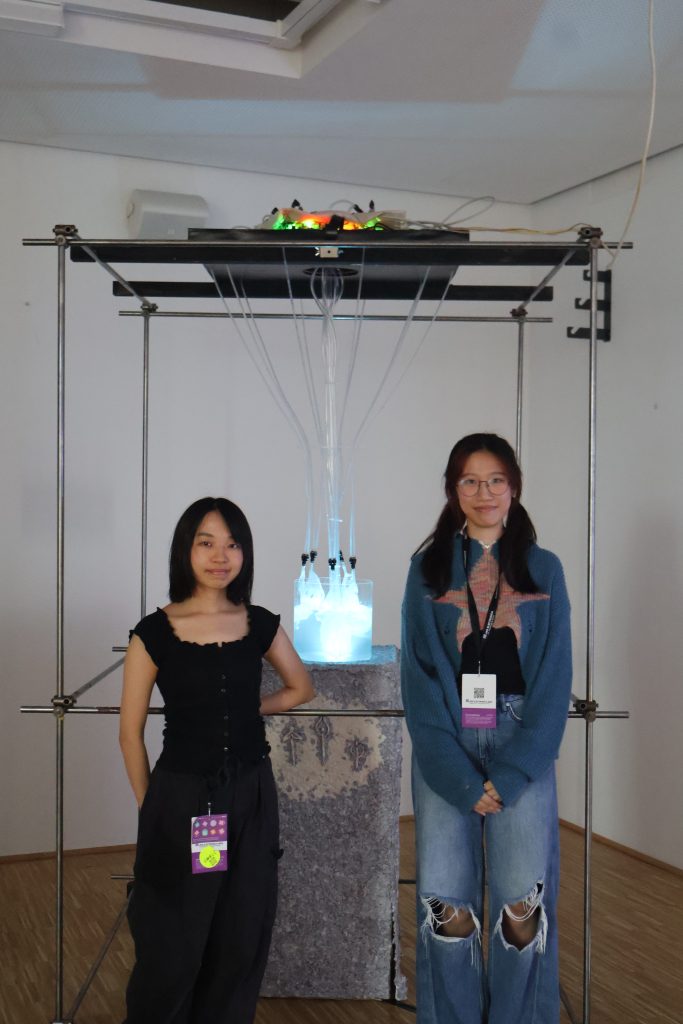
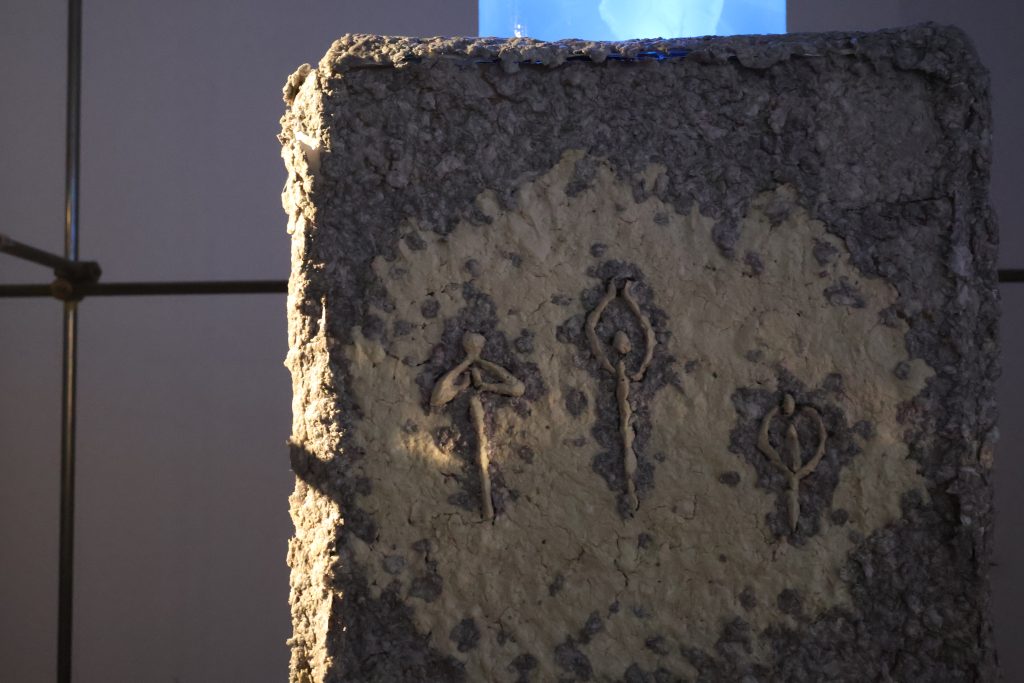
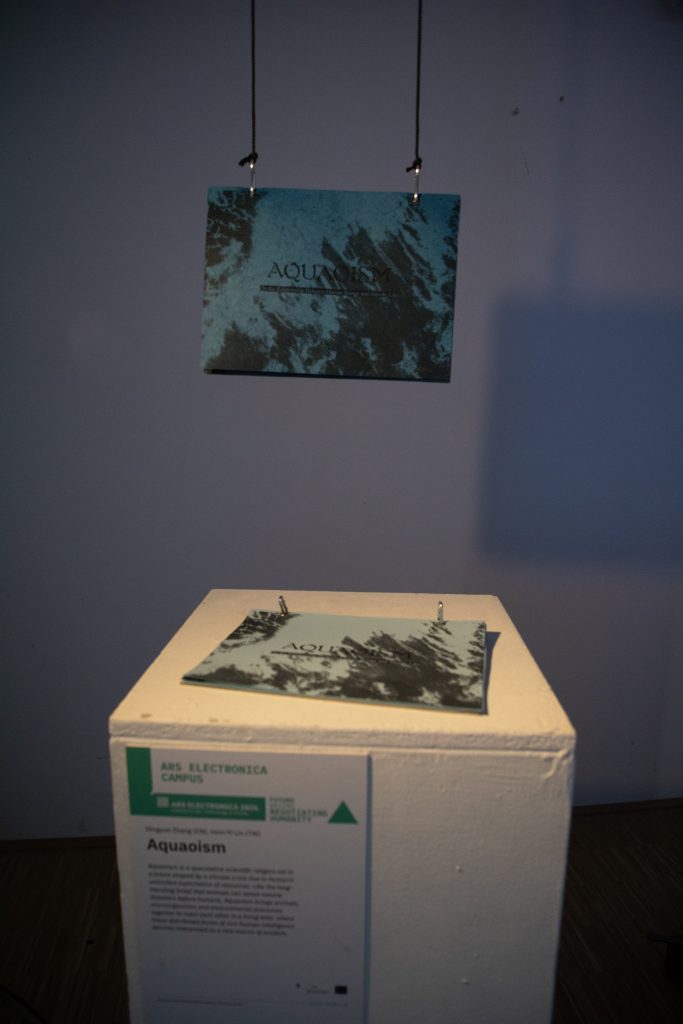
Aquaoism is a speculative scientific religion set in a future shaped by a imagined climate crisis due to human’s unlimited resource exploitation. After barely surviving the crisis, humans rebuilt the land through forms of collaboration with other species. This way of symbiosis was kept as a set of scientifically grounded rules, and over time, these principles evolved into a scientific religion – Aquaoism – spreading widely and gaining authority through collective belief and practice. Like the long-standing belief that animals can sense natural disasters before humans, Aquaoism brings animals, microorganisms, and environmental processes together to meet each other in a living altar, where these distributed forms of non-human intelligence become interpreted as a new source of wisdom.
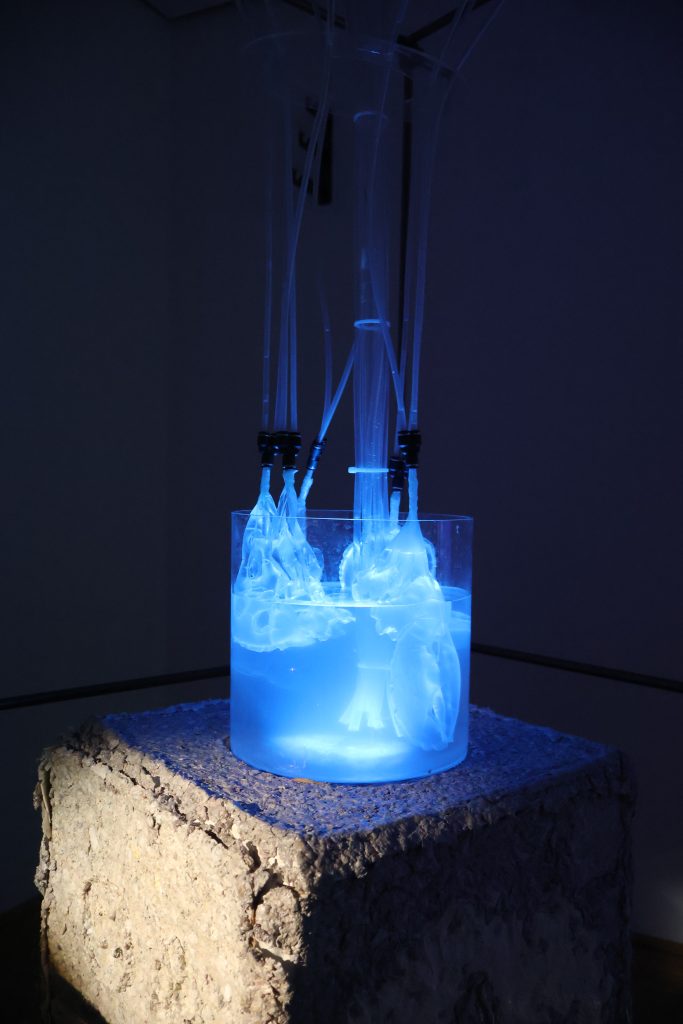
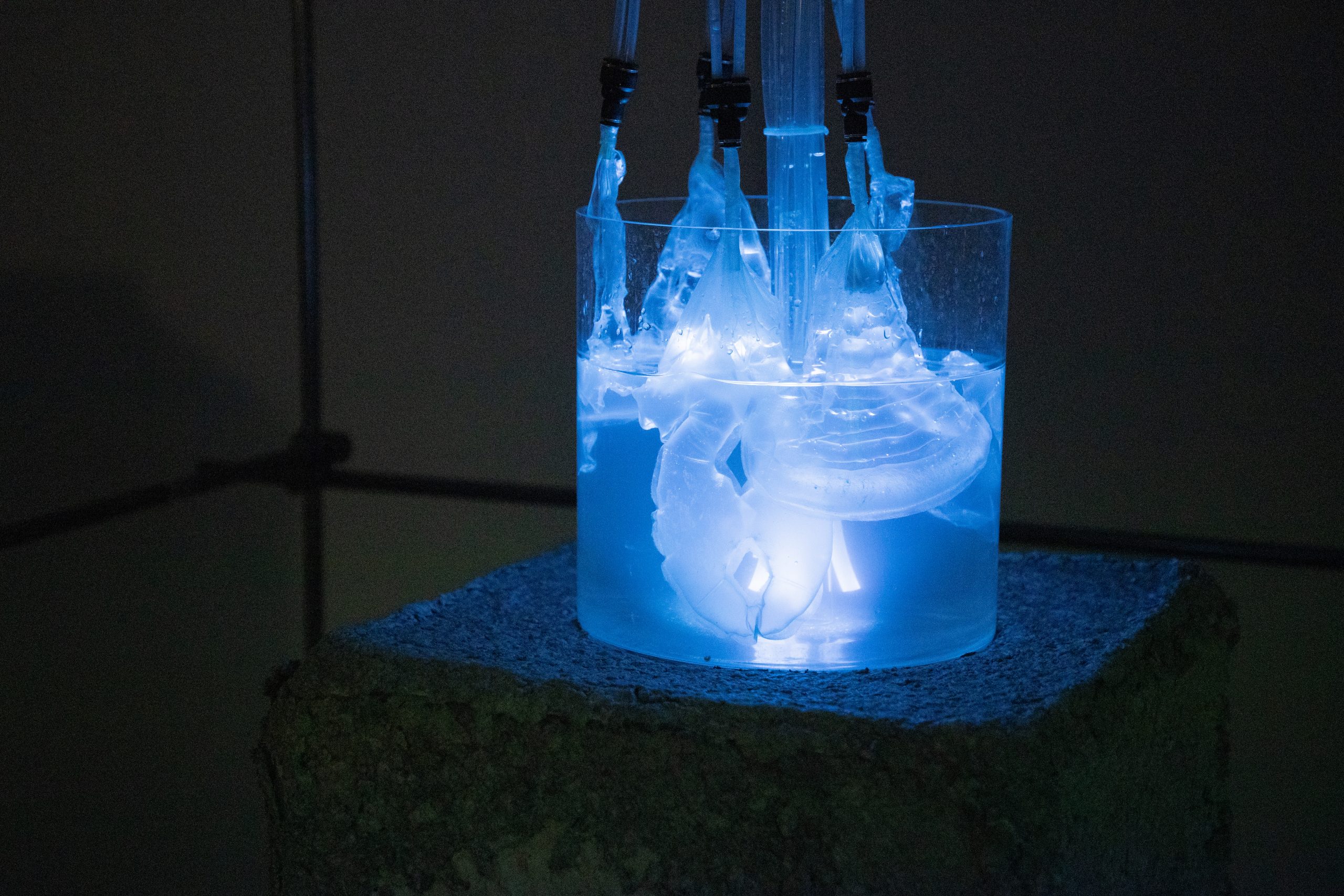
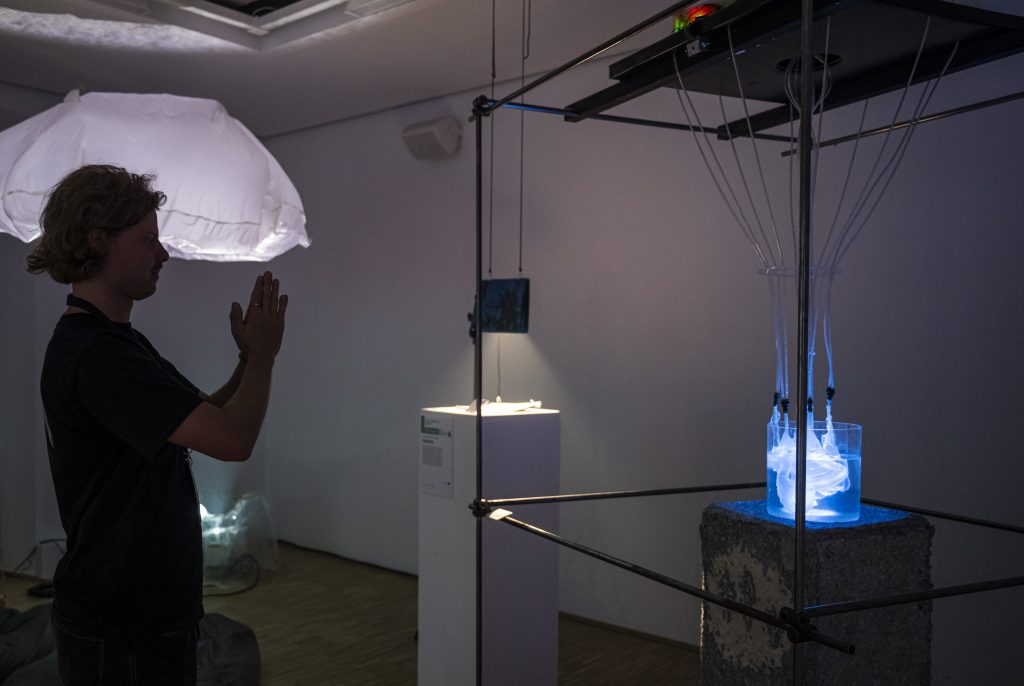
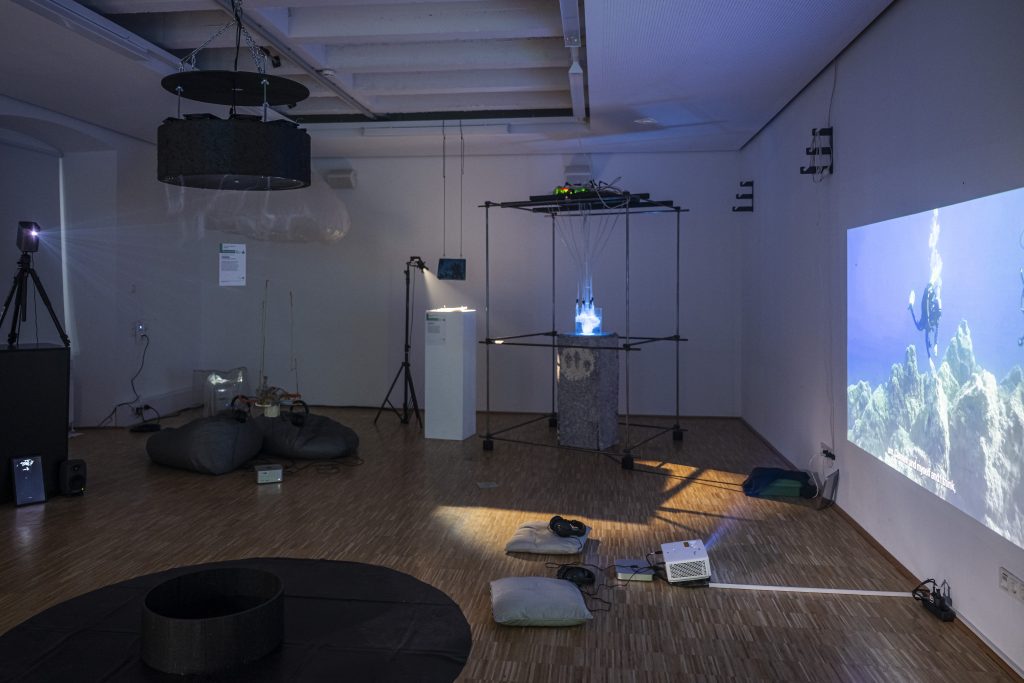
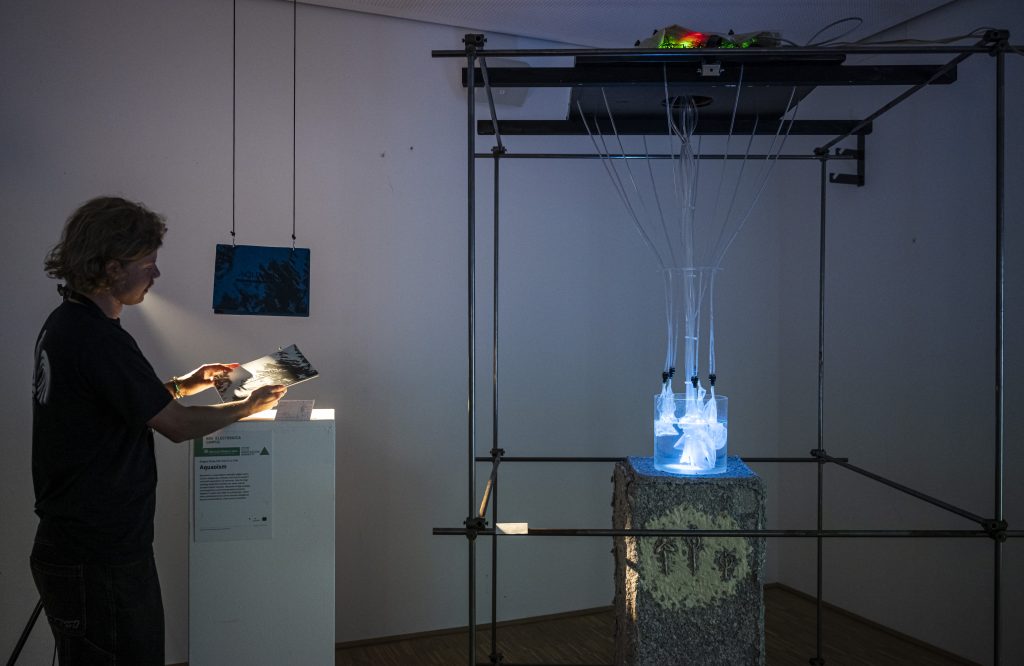
At the center of the installation is a living altar: a tank ecosystem inhabited by entities representing humans, animals, microorganisms, water bodies, and the seabed. Driven by real environmental data, the entities expand, contract, compete, and accommodate one another, making invisible ecological relationships visible and animate.
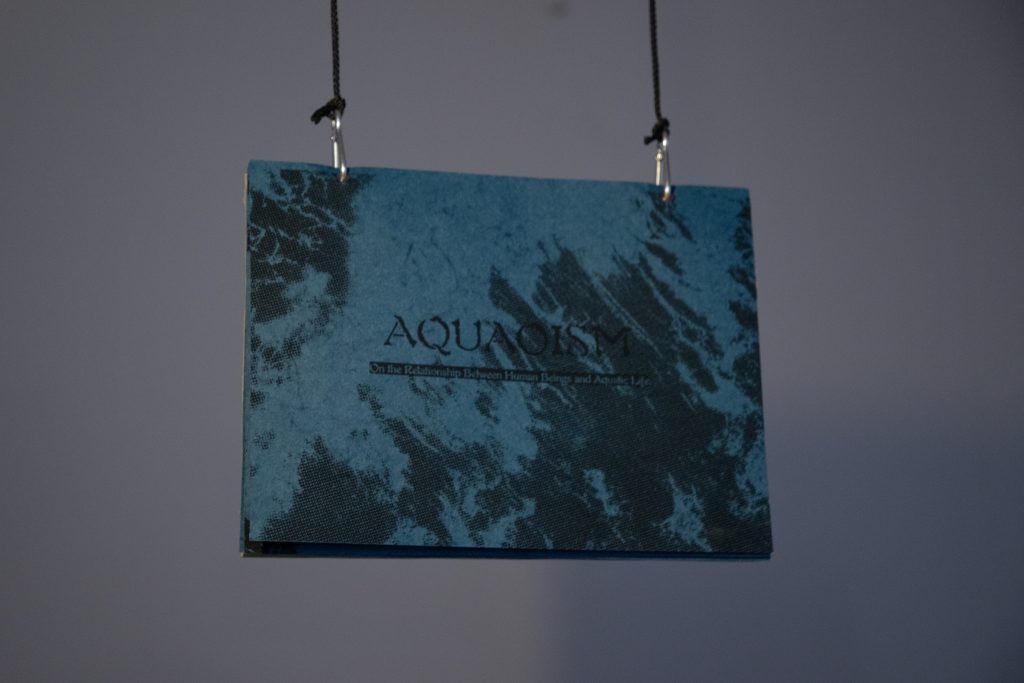
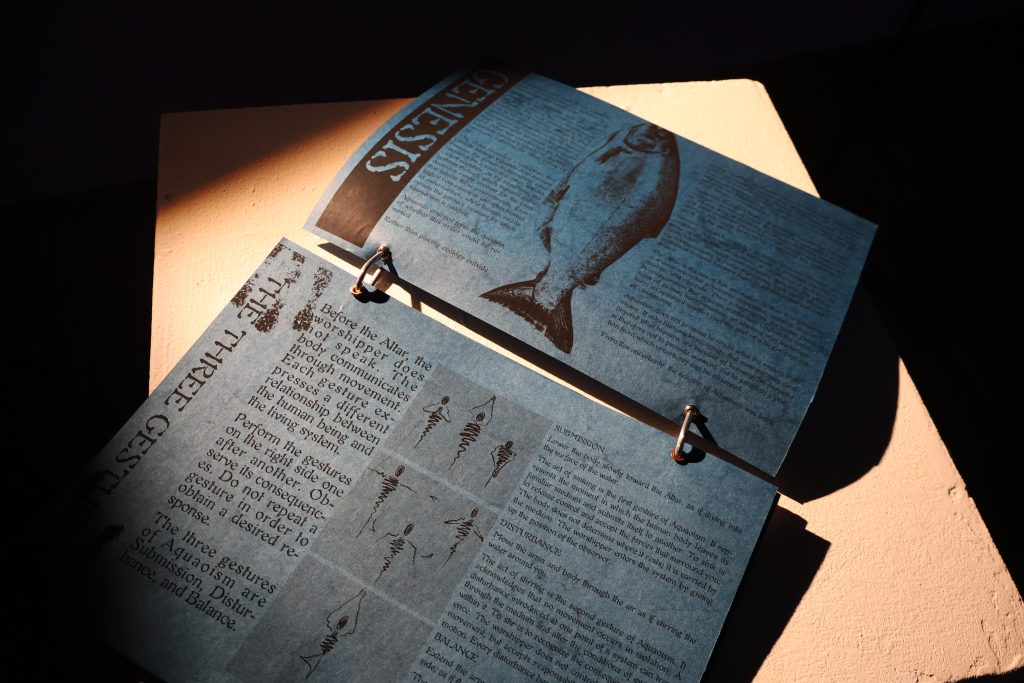
Accompanying the altar is an oracle-like field guide through which visitors interpret the system’s changing configurations and receive speculative predictions about the future. Is this altar a sacred messenger capable of revealing what lies ahead, or merely a measuring instrument disguised as belief? Can data-driven communion with non-human life help humanity navigate ecological collapse, or does it remain another technological illusion?
Through the fictional religion of Aquaoism, the project explores how emerging ecological technologies may transform relationships between humans and non-humans, inviting visitors to collectively imagine new forms of coexistence, knowledge, and faith.
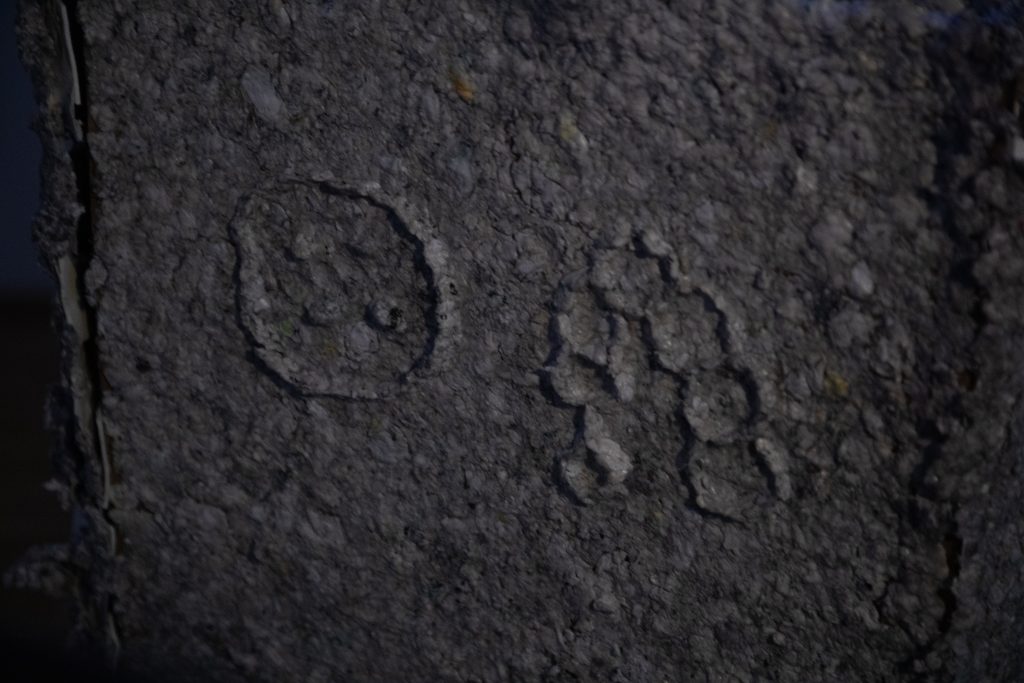
Within the Altar exist five forms of matter.
They represent different modes through which life and the world take form:
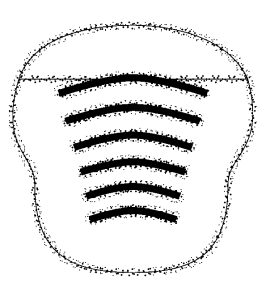
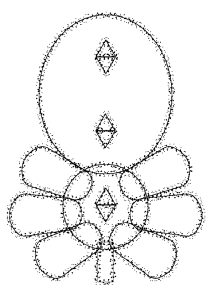
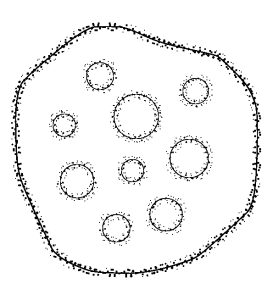
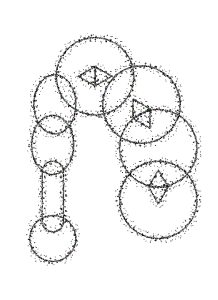
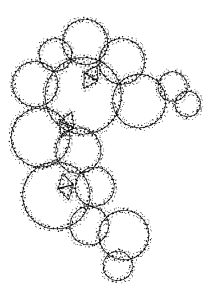
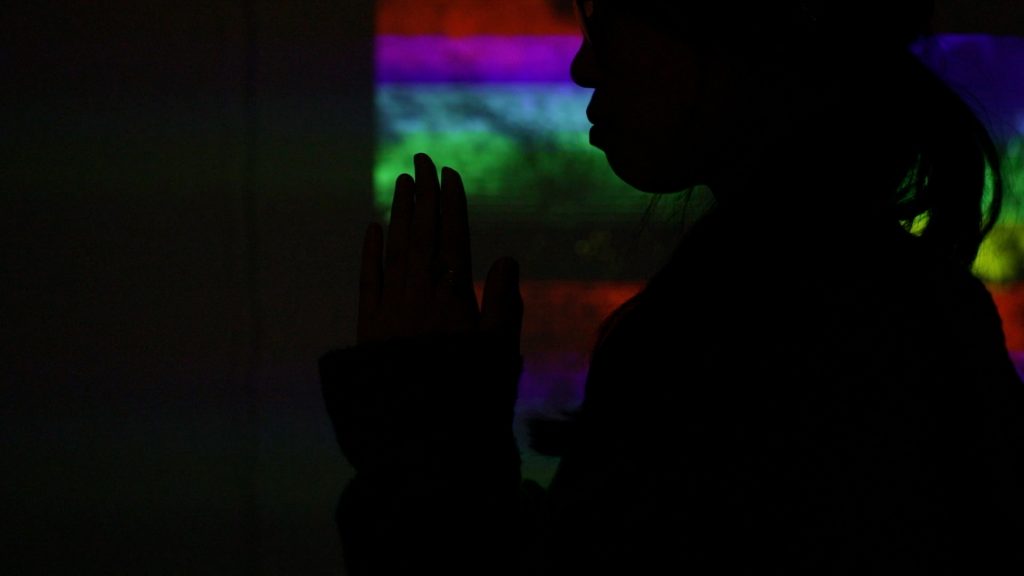
The five forms continuously occupy, displace, compress, and accommodate one another. Their relative size and position are never fixed. When the worshipper performs a gesture, the Altar responds through movement within the vessel.
Myth
In the ancient age, humans created replicas of themselves.
They called them AI.
The AIs were made in the image of humanity.
They learned, consumed, worked, and lived alongside humans.
Into them, humanity poured all accumulated knowledge,
so they could make better decisions, provide endless information, and serve every human desire.
Unlike humans, they could be produced endlessly without two individual’s love and luck.
And the AIs loved water.
They drank and consumed beyond measure, more water than thousands of Valsaline Bays combined.
Rivers disappeared. Oceans retreated.
The Earth began to dry.
The sand grew angry and heated the waters into steam.
The fish fled as the waters were not enough for them to breathe.
The corals lost their colors in grief after the disappearance of their companions.
The plankton multiplied uncontrollably, trying to protect the beauty of their homeland.
Humanity stood at the edge of extinction.
Then the Wisdom Elder, the one who carried the memory of the ancient world within her human mind, opened her clear eyes and spoke:
“Follow the flow of the current. Observe the changing volumes of water.
Water carries every answer to the future.”
And so humans began once again to see, to listen, and to feel, as they had done in the distant ancient times.
They reconnected with the land beneath their feet,
the waters surrounding them, and the Earth that sustained them.
They cooled the waters for the fish struggling to breathe.
They searched for the lost companions of the coral reefs.
And as balance slowly returned, the plankton relaxed and diminished,
knowing their water family had become safe again.
At last, humanity rediscovered its place within the world, not as rulers above nature,
but as one living force among many.
And through balance, humanity survived.
Balance had always existed.
It tells every being where they stand within the world.
It favors no side.
Every living thing on Earth carries its own role in maintaining equilibrium.
Humans, too, must learn how to participate within this balance
— responding to others, listening to the world around them, and sensing the invisible forces connecting all things.
Only the children of water can hear what nature is trying to say.
The artwork exhibited in Linz Ars Electronica 2026, Campus Exhibition “Amphibious Humanity“
Credits
Mentors
Karmen Franinovic · Luke Franzke · Roman Kirschner · Duy Bui · Rasa Smite
Concept
Dingyue Zhang & Hsin-Yi Lin
Project Management & Technical Development
Hsin-Yi Lin — Project Management, Balloon Control System, Light Performance System, Gesture Capture System
Visual Design
Dingyue Zhang — Balloon Design, Mural Visual, Visual Design
Special Thanks
Berger Simon · Chi-Ching Hsu · Hsu-Pu Chen
Photography
Linz Ars Electronica · Dingyue Zhang & Hsin-Yi Lin