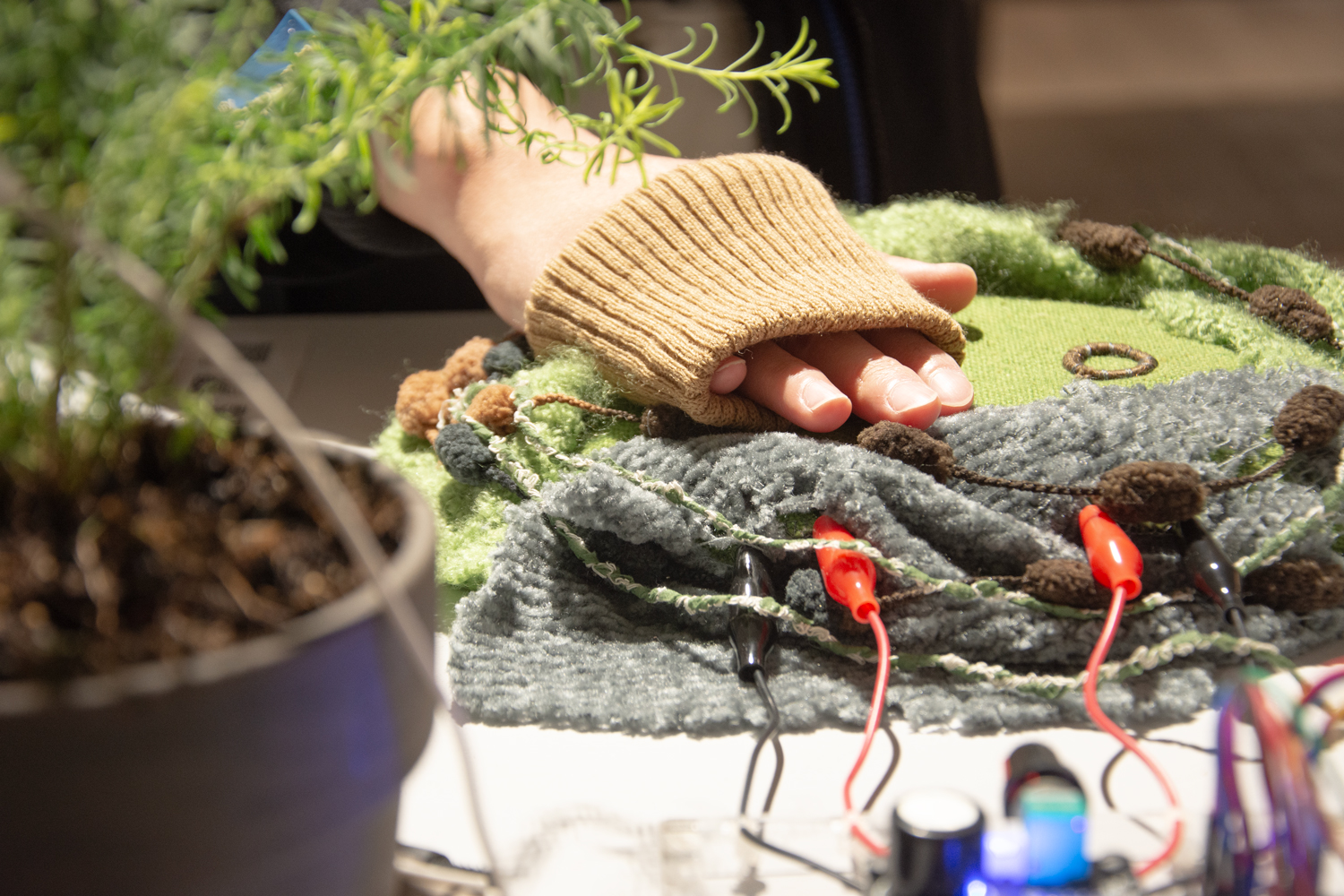
In contemporary design practice, materials are often expected to be stable, predictable, and optimised for human use. Standardisation, material specifications, and data sheets provide designers with references that enable control and reproducibility throughout the production process. Bio-material, although its development is motivated by sustainability concern, their living nature offers another way to understand materials as constantly changing entities that actively participate in design processes.
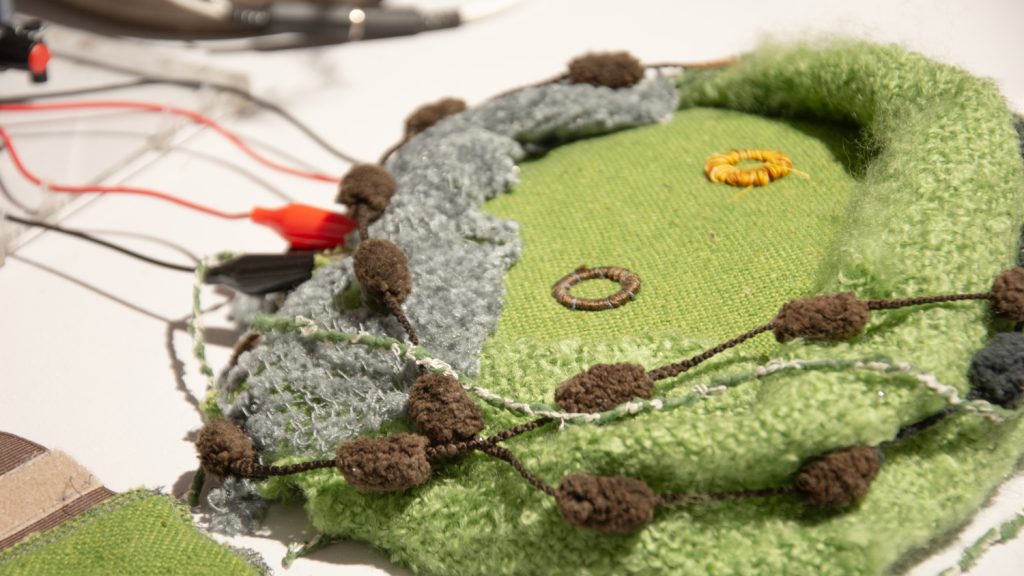
In this project, rather than seeing materials as inert substances waiting for human use, I would like to emphasise material agency through its processes of growth, decay, metabolism, and adaptation. It’s not merely a natural resource for humans, but a collaborator in design practice. The electrical signal – comparable to that found within the human body – is used as a connection to understand the processes taking place within a material. In this project, two materials – mycelium and linen – are explored through their electrical signals. These signals are collected and transformed into vibrations, allowing participants to sense the otherwise imperceptible activities within the materials.
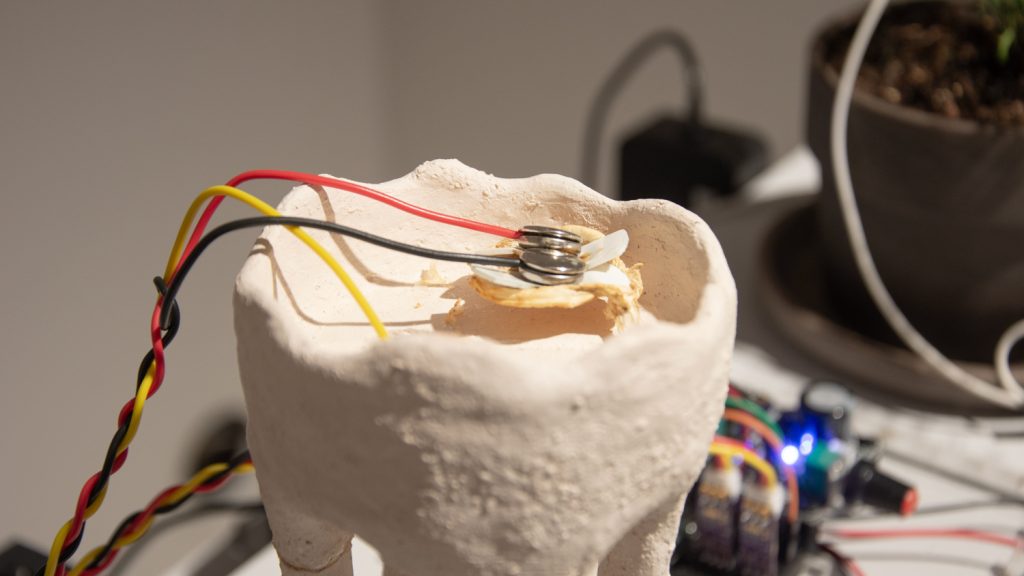
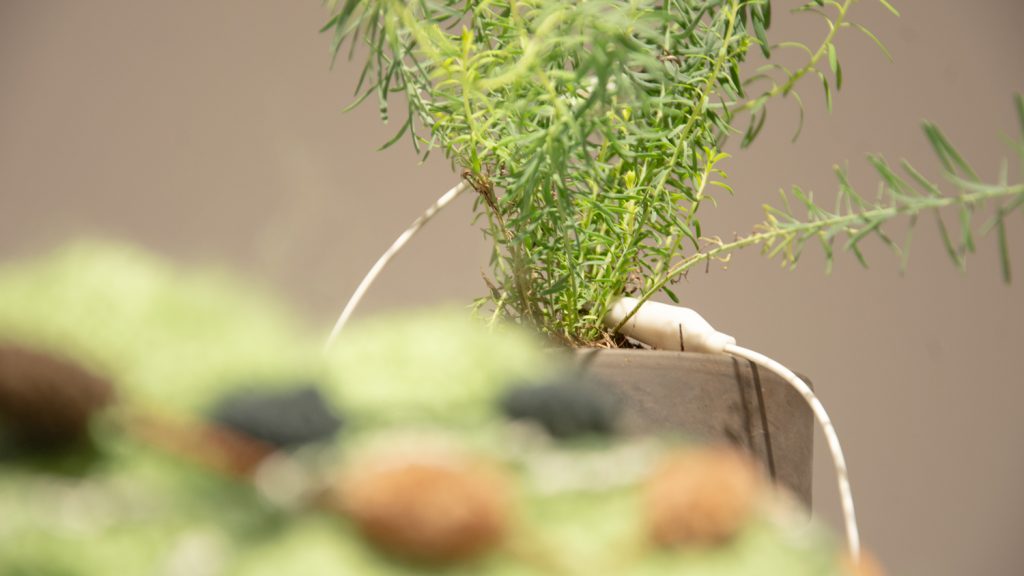
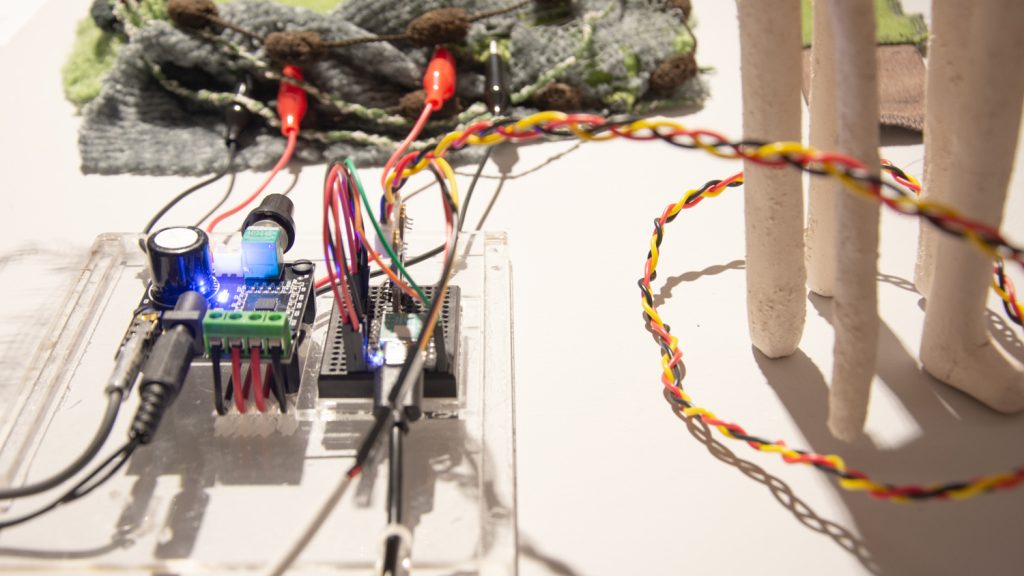
By making the agency of living materials visible, the project provides an alternative worldview in which humans are not the sole actors, but one participant among many forms of existence. In this sense, the work escapes from a modern understanding of nature as a resource for unlimited human exploitation, and instead, explores possibilities for more equal relationships between humans and non-human beings through material practice.
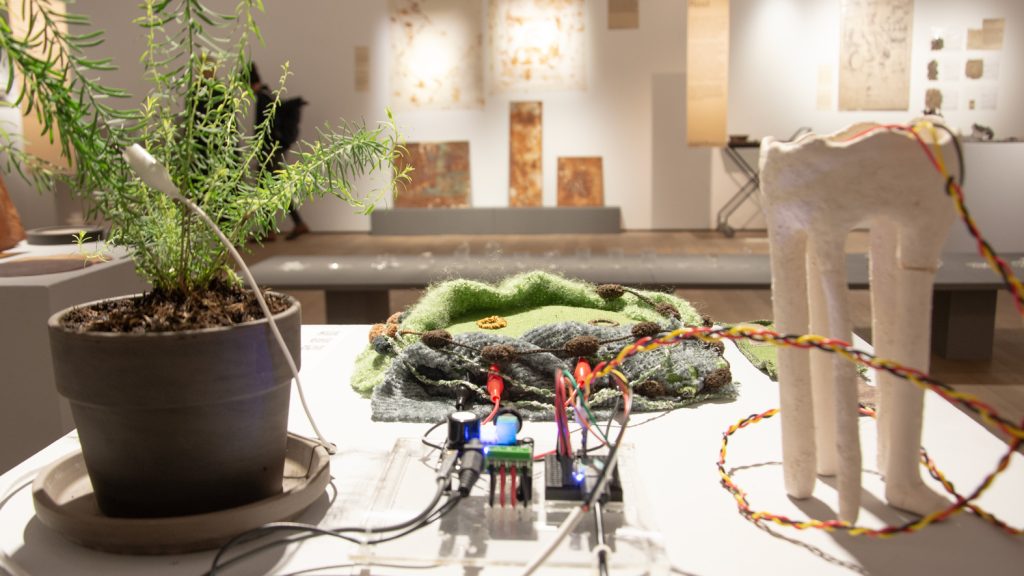
The project was exhibited on exhibition Was ist Material? at Toni-Areal ZHdK.
Credits
Mentor | Roman Kirschner, Müller-Reissmann Franziska, Eva Wandeler, Nadine Schütz, Andi Wagner
Special Thanks | Caja Peter, Yu-Jie Lin