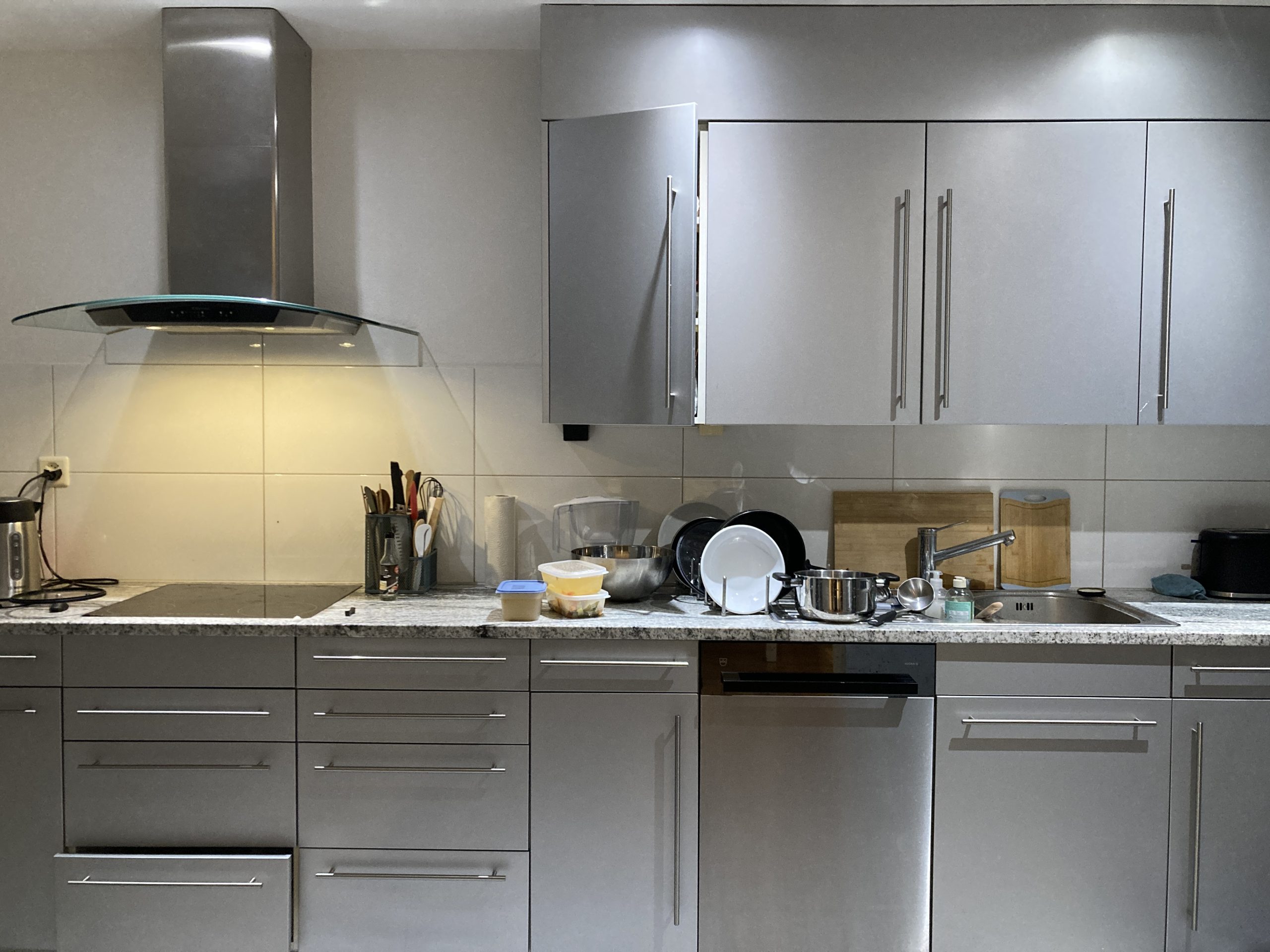
Molotch (2018) suggests that the existence of certain objects reflects particular social structures. The making of a material, therefore, also reveals a mindset embedded in its mode of production. Plastic is often regarded as a material invention that represents human intelligence and a symbol of modernisation. Its emergence is actually has the democratisation of everyday objects since it brought great convenience to human society through low-cost production. The invention, experimentation, and application of plastic are highly artificial and scientific processes that have fostered the belief that everything in the physical world can be understood, controlled, and manipulated once its principles are revealed. However, the ongoing environmental crisis has already demonstrated the complex interdependence of all elements within the world. Although the initial intention behind its invention was to find an alternative to the gradually depleting natural resources, the excessive and uncontrolled use of plastic, together with its perception as a disposable material, has ultimately led to severe environmental problems.

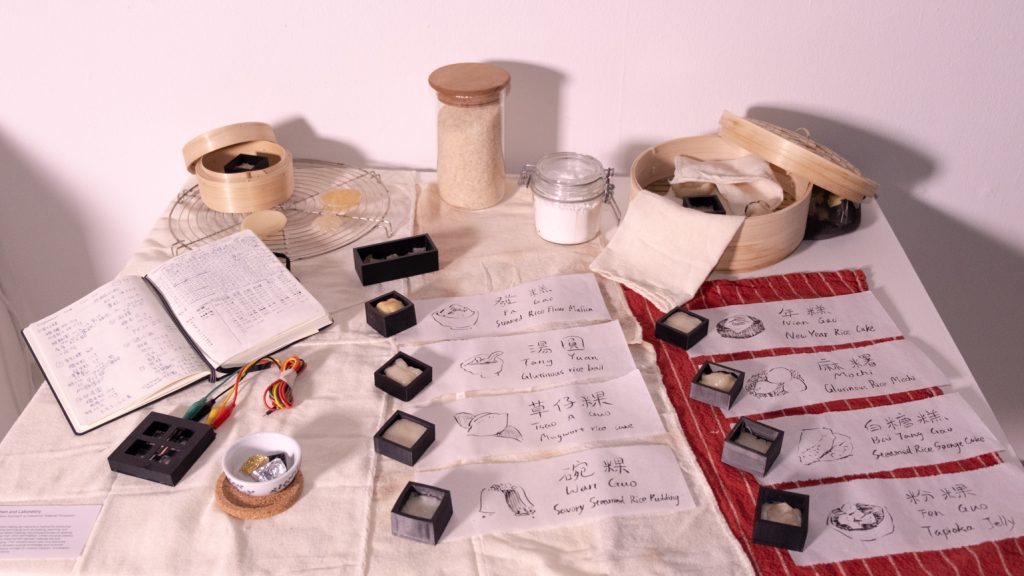
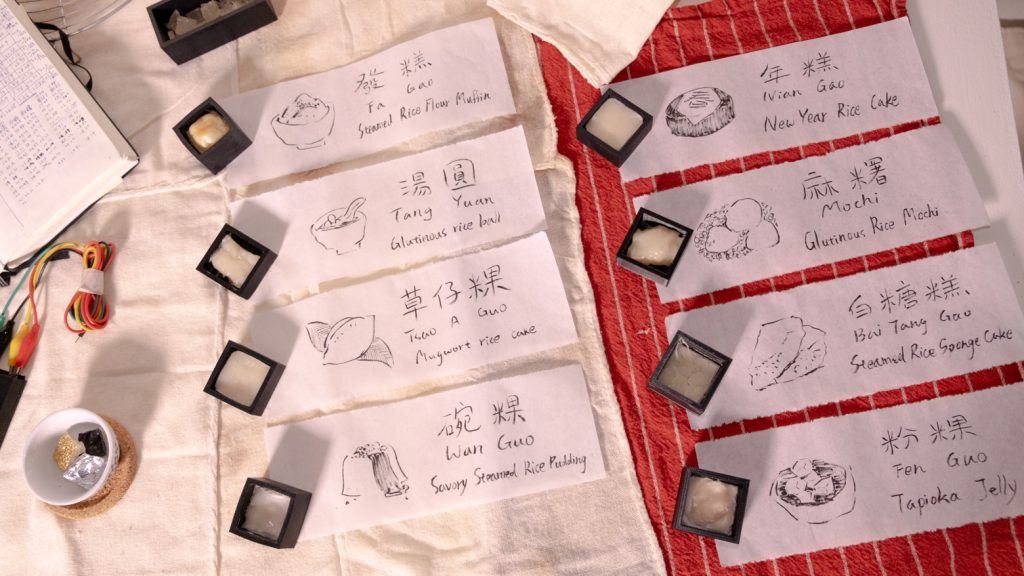
In response to this phenomenon, this article explores a new approach as an alternative to the purely scientific method of plastic production. A food-making process was adopted due to its similarity to starch-based plastic production, both of which involve gelatinisation. Food-making is often intuitive, relying on experience and adapting recipes to situational conditions. Moreover, in the cultural context of traditional rice-dish preparation, the preparation of rice food actually builds familial connection and transmits cultural values. It functions not only as a technical process but also as a social and emotional practice.
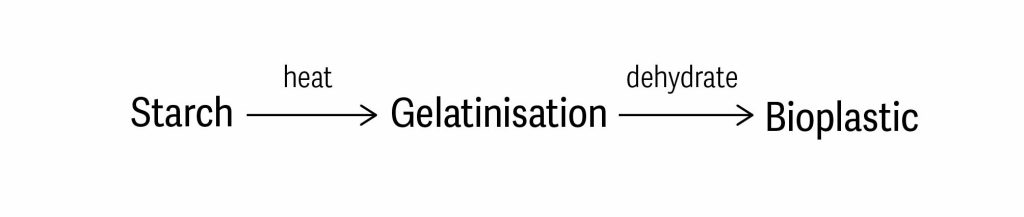
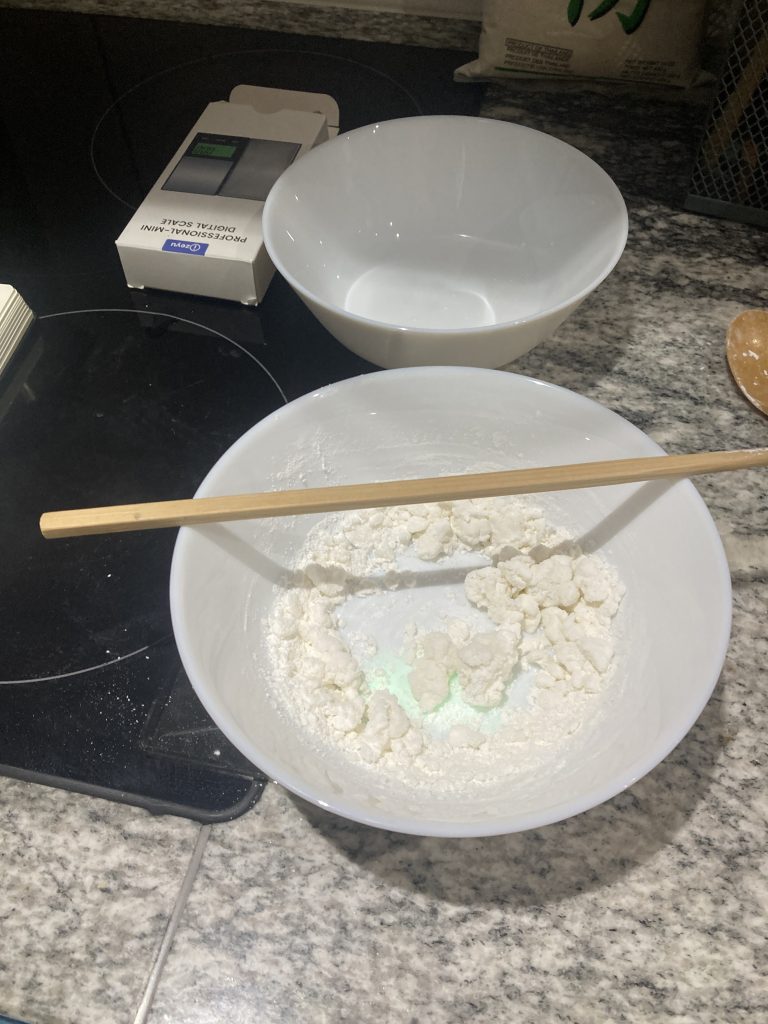
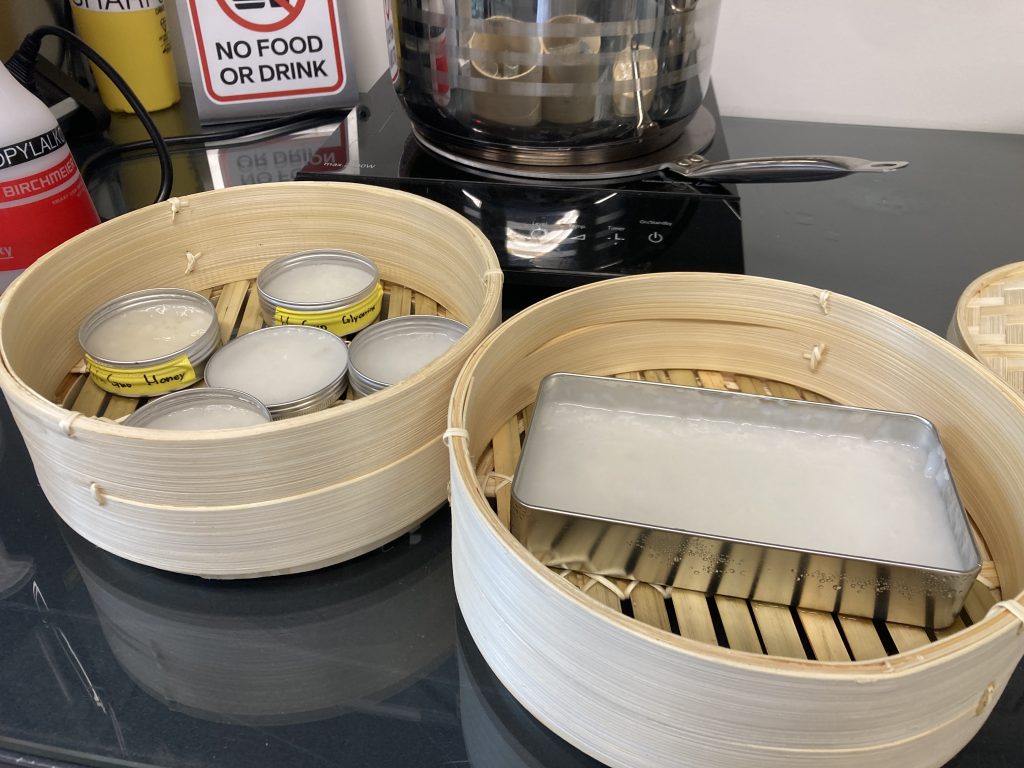
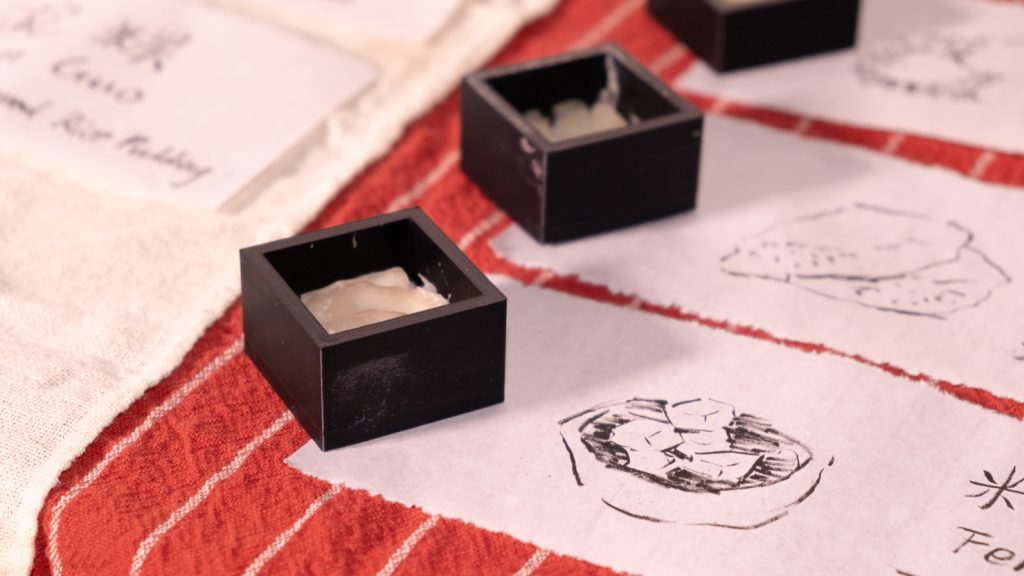
As a result, the mindset developed through food-making fosters a different kind of relationship between humans and materials, one based on care, intimacy, and attentiveness. The ephemeral nature of food, which can only remain fresh for a limited time and changes in texture over time, may seem like a limitation, yet it also constitutes a unique attribute of this material. In addtional, although this study proposes a cultural and intuitive method as a new approach to material-making, scientific techniques were also incorporated for large-scale production and data analysis. The study suggests that the ability to shift between these two methods according to the situation is itself a form of methodological wisdom. Future plans include organising workshops and conducting further examinations of the chemical and electrical properties of the material, to both manifest this concept and explore its potential applications.
Future plan
As a core concept of food-making, especially in the traditional practice of making Guo, it’s essential to emphasise the aspect of collective production as an inheritance. It’s a process that not only creates food but also builds connections and passes on the essential values among people. Due to the uncertainty and variability of the material, this study has only focused on individual experimentation to understand its fundamental attributes. However, in the future, workshops are planned to extend this exploration, incorporating collaborative making as a way to share and spread the idea of food-making as a method of material production.
Furthermore, as this material lies at the intersection between typical modern materials and transient, bio-based materials, it holds potential for diverse future applications. Its physical, chemical, and electrical responses will be further examined to develop new forms of material experience. Through these explorations, new possibilities for application may also emerge, expanding the dialogue between material science, design, and the embodied knowledge of making.
The work was exhibited in the ZHdK IAD Master Thesis Working In Progress Exhibition 2025, at Toni-Areal
Credits
Mentors | Karmen Franinović, Joëlle Bitton
Special Thanks | Luke Franzke, Max Rheiner, Bui Duy, Anthea Oestreicher, Hecteria
References
- BBC documentary, dir. 2010. Better Living Through Chemistry. 4 vols. Genius of Design. 59:31.
- Freinkel, Susan. 2011. “A Brief History of Plastic’s Conquest of the World.” Scientific American. https://www.scientificamerican.com/article/a-brief-history-of-plastic-world-conquest/.
- Latou, Bruno. 2012. Nous n’avons jamais été Modernes: Essai d’anthropologie symétrique (我們從未現代過). Socio Publishing.
- Molotch, Harvey. 2018. Where stuff comes from : how toasters, toilets, cars, computers, and many other things come to be as they are (東西的誕生:談日常小物的社會設計). Socio Publishing.
- Science Museum. 2019. “The Age of Plastic: From Parkesine to Pollution.” https://www.sciencemuseum.org.uk/objects-and-stories/chemistry/age-plastic-parkesine-pollution.
- Stevens, E. S. 2002. Green Plastics: An Introduction to the New Science of Biodegradable Plastics. Princeton University Press. https://doi.org/10.1515/9780691214177.
- Hsu Mau-Huei, and Gu Li-Li. 2022. Traditional Seasonal Rice Dishes (經典歲時節慶米食:跟著職人學做古早味粄粿,找回懷念的好滋味). Xinbei Publishing.