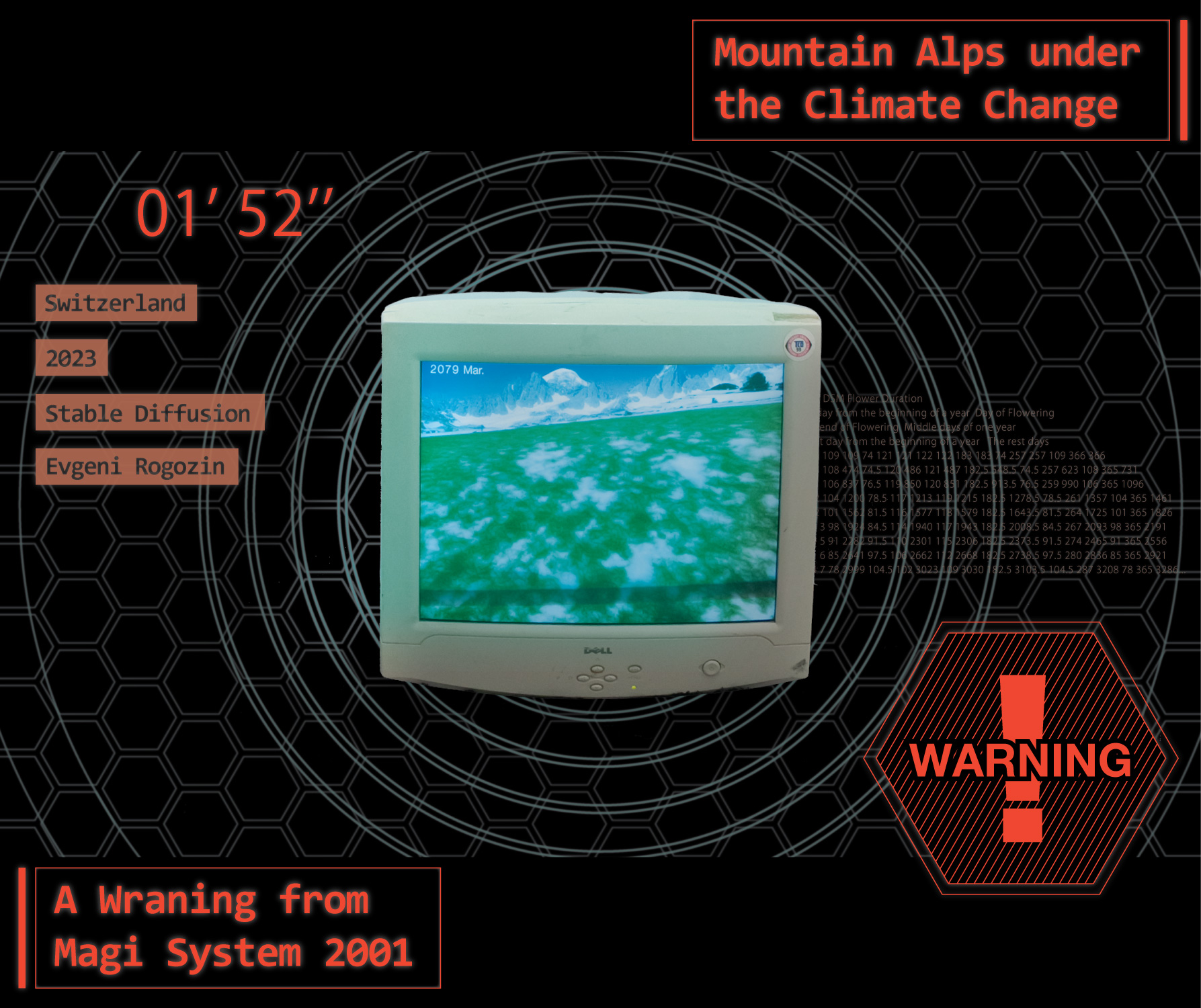
Switzerland, 2023
Stable Diffusion, Evgeni Rogozin
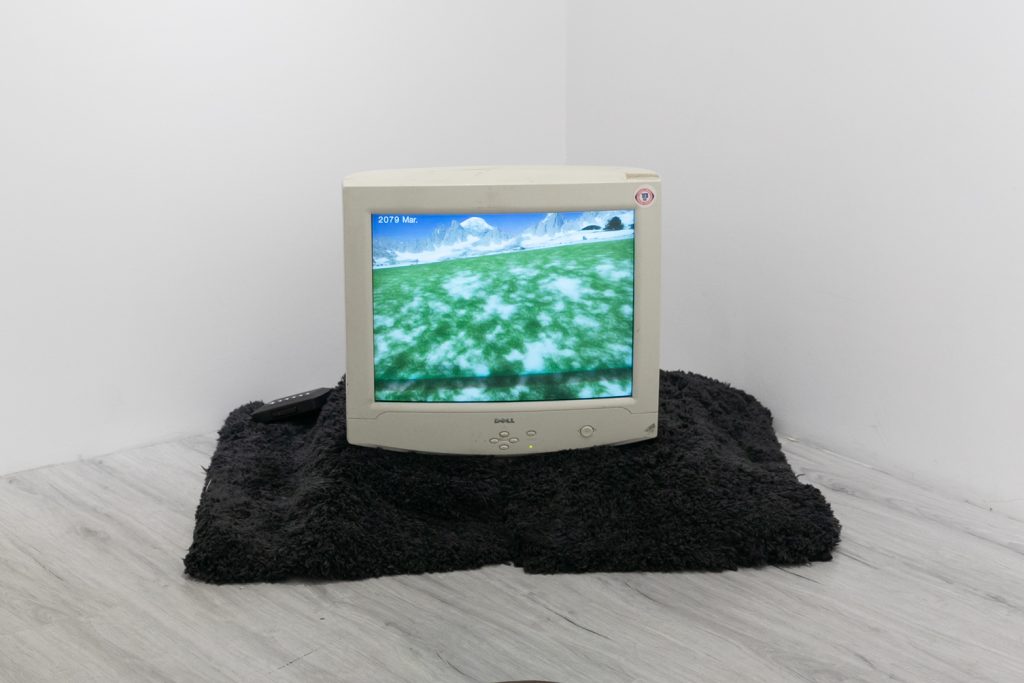
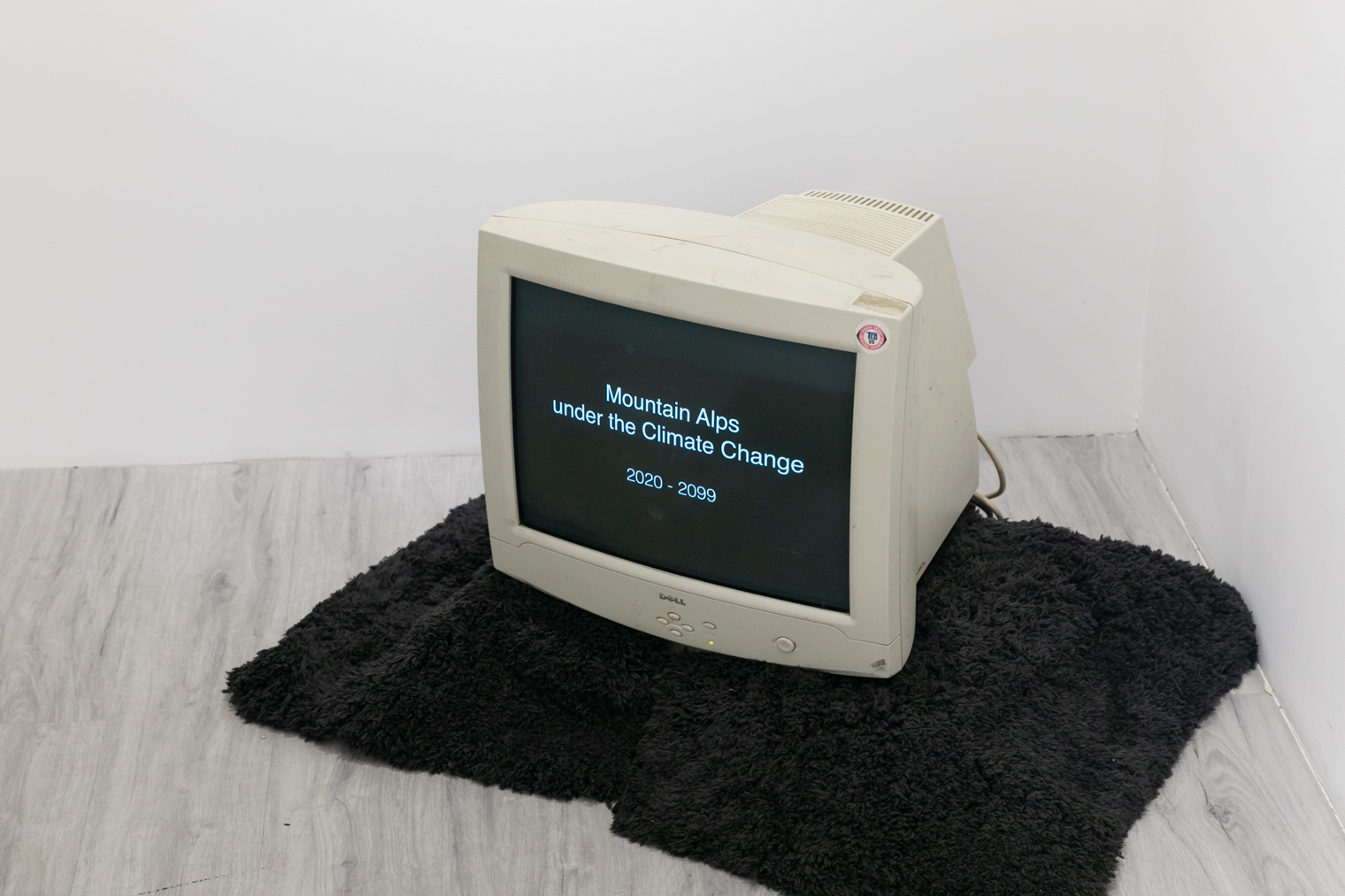
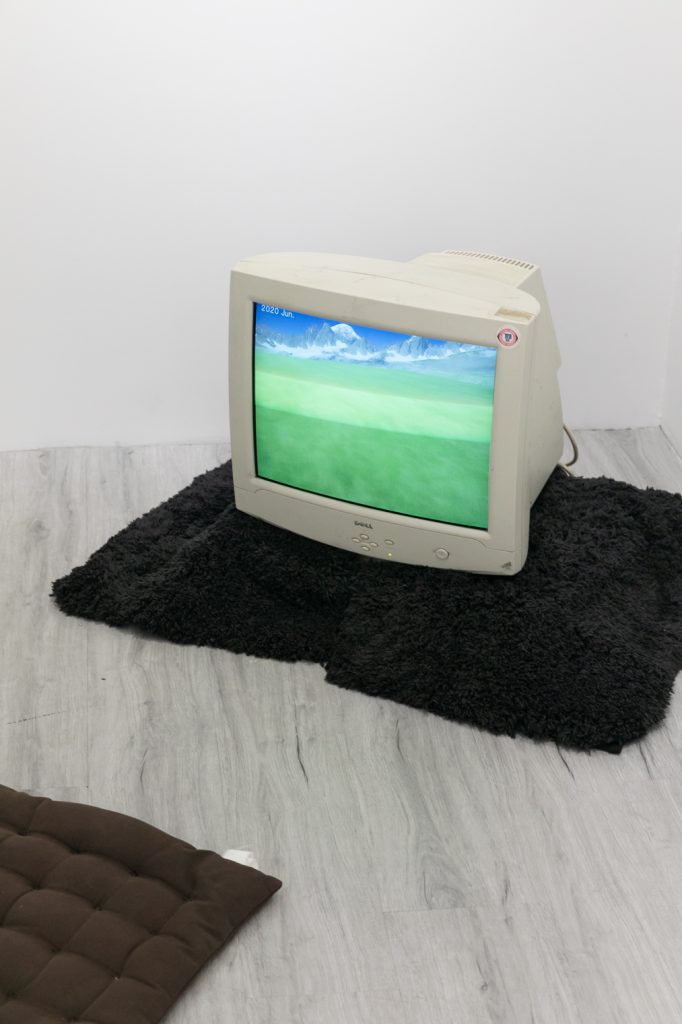
I have created a video artwork using AI-generated images to raise public awareness of climate change. This artwork is based on the findings and data from two research papers
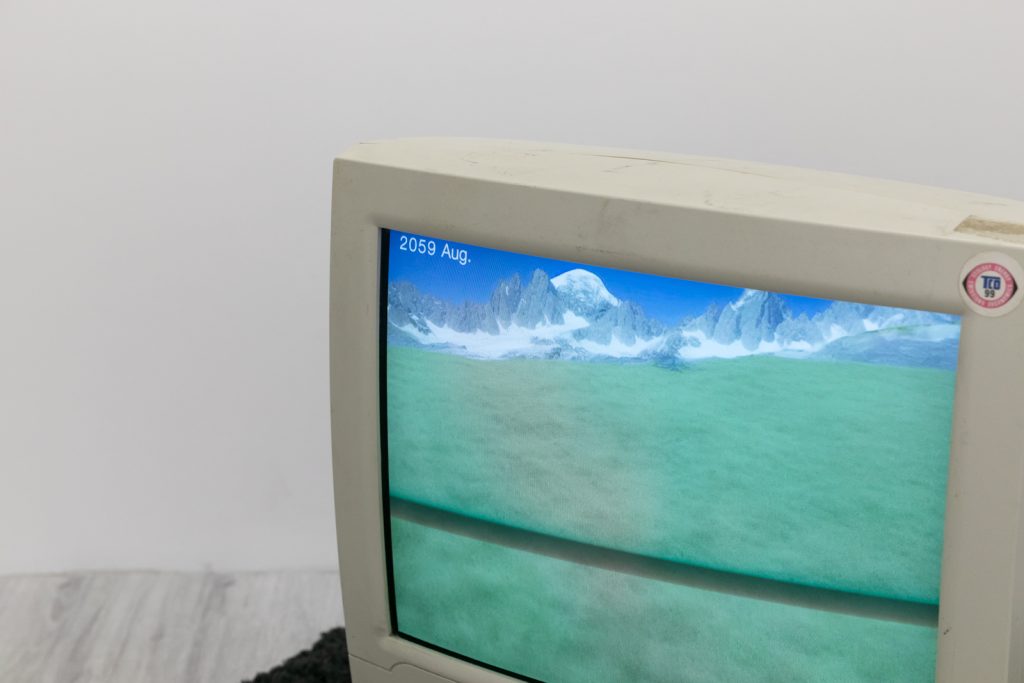
conducted by the University of Basel on Alpine plants and snowmelt: “Past and future snowmelt trends in the Swiss Alps – the role of temperature and snowpack” and “Flowering phenology in alpine grassland strongly responds to shifts in snowmelt but weakly to summer drought.” The research shows that climate change will result in a longer growing season for alpine plants, but early snowmelt may expose them to frost damage due to cold air contact. I attempted to depict these changes using a time-lapse video spanning a duration of 80 years with intervals of 10 years.
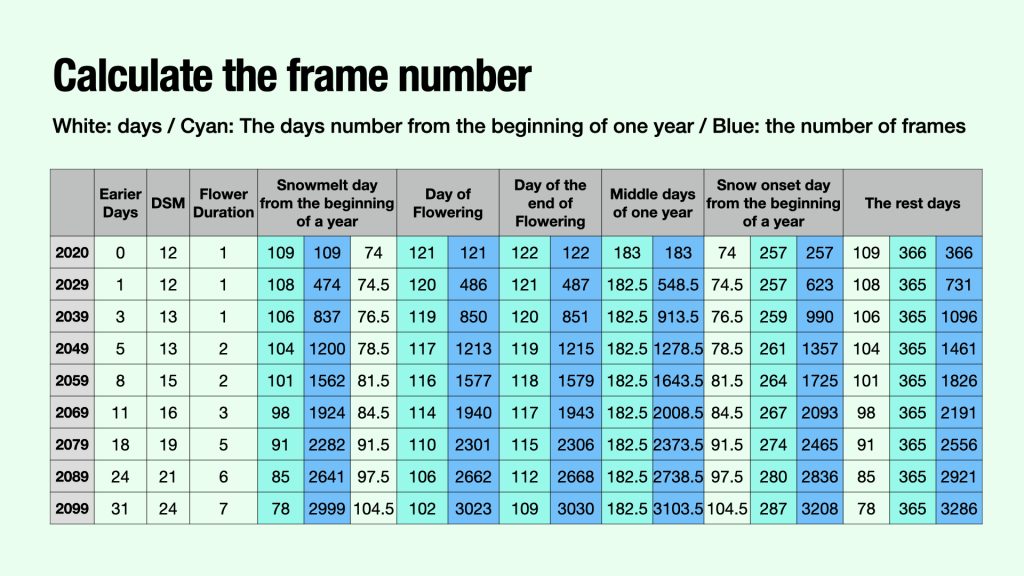
The artwork is primarily divided into two parts. The first part involves the calculation of various time points, including snowmelt duration and flowering periods, for each year.
Based on the report “Past and future snowmelt trends in the Swiss Alps – the role of temperature and snowpack,” which refers to “the CH2018 Climate Change Scenarios for
Switzerland,” the predicted changes in snowmelt duration over 80 years were presented for three different carbon emission scenarios (RCP2.6, RCP4.5, RCP8.5). I selected the scenario with the most significant variation, “RCP8.5,” as the basis for creating this artwork.
The second part showcases the variations of plants under different climatic conditions. I have chosen “Geum montanum L.” as the primary plant for representation because it exhibits significant changes when faced with early snowmelt. The research paper provides ample data regarding this plant, and it also performs well visually.
To create the visual imagery of the Swiss Alps, I initially utilized Stable Diffusion to generate ideal images. Once satisfactory images were obtained, I used the Inpaint function to locally modify the distribution of plants and the state of snowmelt. For dynamic changes such as snow melting, flowering, and withering, I adjusted the “Denoising strength” parameter to control the magnitude of variations, thus creating gradient-like images.
Lastly, I placed the images into Premiere to create the video based on the designated time points, and I added a musical accompaniment. The use of AI in this process allowed me to quickly generate the required images and fine-tune the desired effects using various parameters and functions. However, it is ironic that AI models, from training to usage, consume a significant amount of Earth’s resources. Yet, I employed this very technology to create a piece that aims to raise awareness about global warming, highlighting the intriguing connection between the two.
Development
This is a speculative design project I created for“ Deep Learning” at FHNW HGK IDCE. In this class, I aim to experiment AI generation technology, and what concerns me is “How to make future scenarios more tangible through AI technology?”
The project is divided into three parts: “Topic Finding,”“ Visual/ Scientific facts Research,” and “Video making.”
Topic Finding
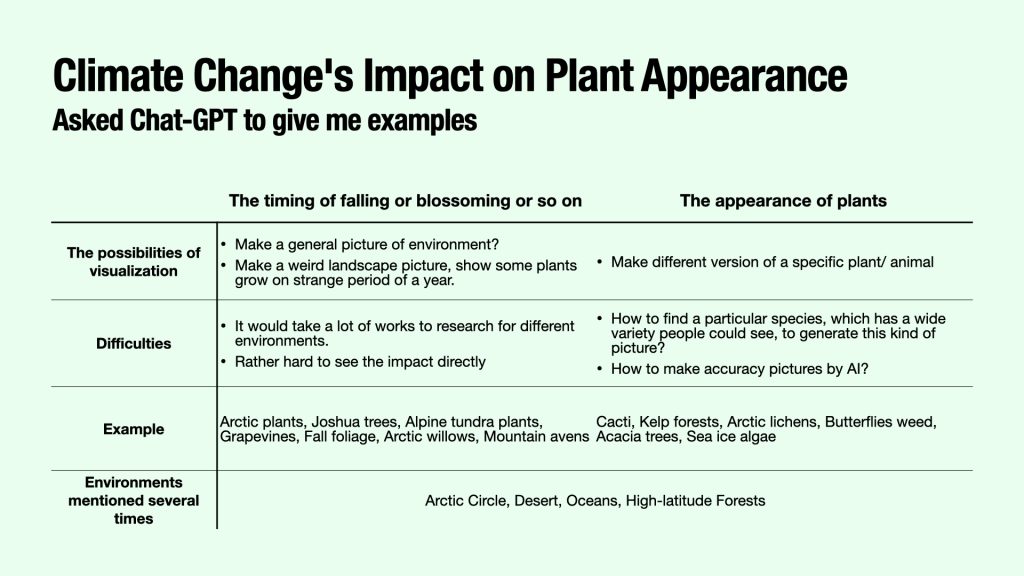
Climate Change’s Impact on Plant Appearance Asked Chat-GPT to give me examples
During the initial group discussions, we brainstormed several possible directions for the project. Among them, I found the idea of “using plants to visualize the invisible effects of global warming” particularly intriguing.
How do plants respond to global changes? Two research papers based on the Alps. To find existing research related to plants and global warming, I utilized keywords such as “plants,” “global warming,” and “climate change” in my search on Google Scholar.
And then I found two research papers which are written by a research group at the University of Basel. They indicated how the weather and the plants in the mountain Alps could be affected by global warming.
- Past and future snowmelt trends in the Swiss Alps the role of temperature and snowpack
- Flowering phenology in alpine grassland strongly responds to shifts in snowmelt but weakly to summer drought
Conclusion about the effect of global Change in the Alps Based on the two papers
- Climate Change will affect the timing of snowmelt and snow onset.
- Early snowmelt led to the longer growing season
- However, it also implies that the plants will come into contact with colder air and be influenced by photoperiod easier
- These may include lower flower numbers, reduced leaf growth and a lower survival, as observed for the evergreen forb Gentiana nipponica by a one-month earlier snowmelt (Kawai and Kudo 2018)
- Snowbed species produced less seeds after an earlier snowmelt of 18 days (Tonin et al. 2019)
- At 2400m asl enhanced its growth, while at 1800 and 2000m asl led to frosts and ultimately limited growth
Visual/ Scientific facts Research
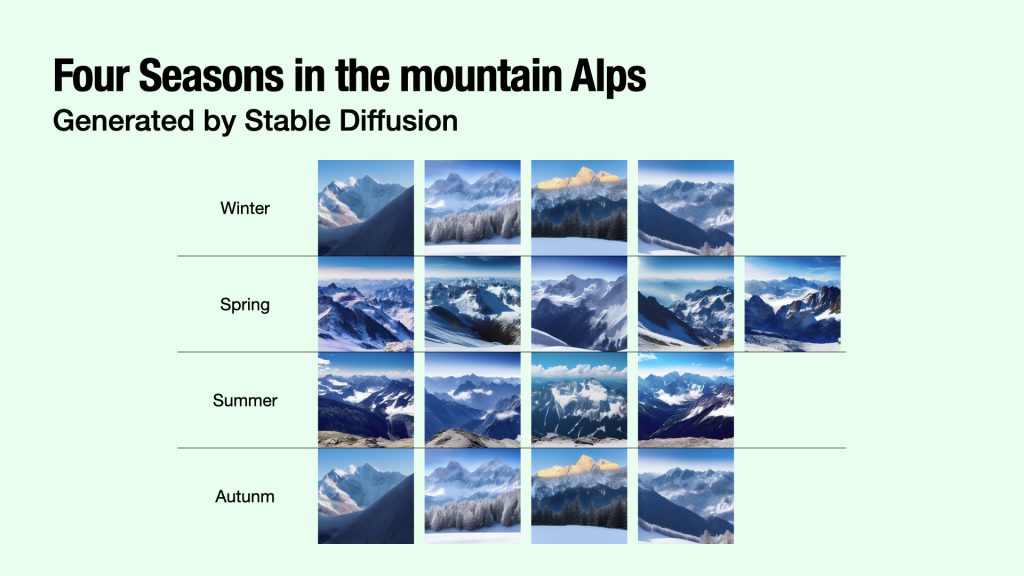
I initially generated images representing the four seasons in the mountainous Alps.
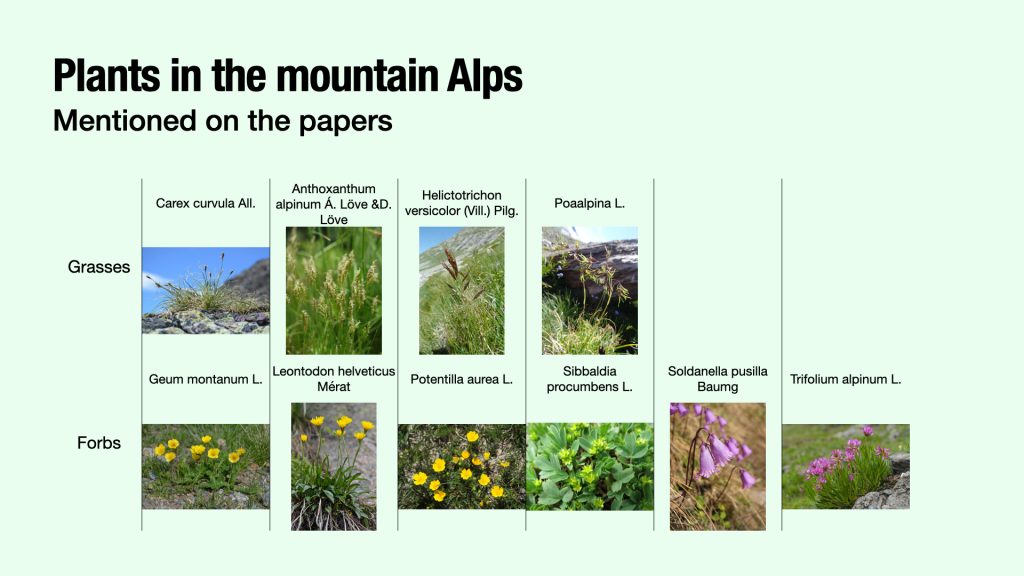
Since I was not familiar with the plants in the Alps, I searched the images on Google to know what kinds of plants live there.
Based on the information I gathered earlier, I attempted to generate the desired landscape. In this image, my goal is to ensure that the audience can easily identify it as the
Alps and clearly observe the changes in plant life throughout the seasons under the influence of climate change.
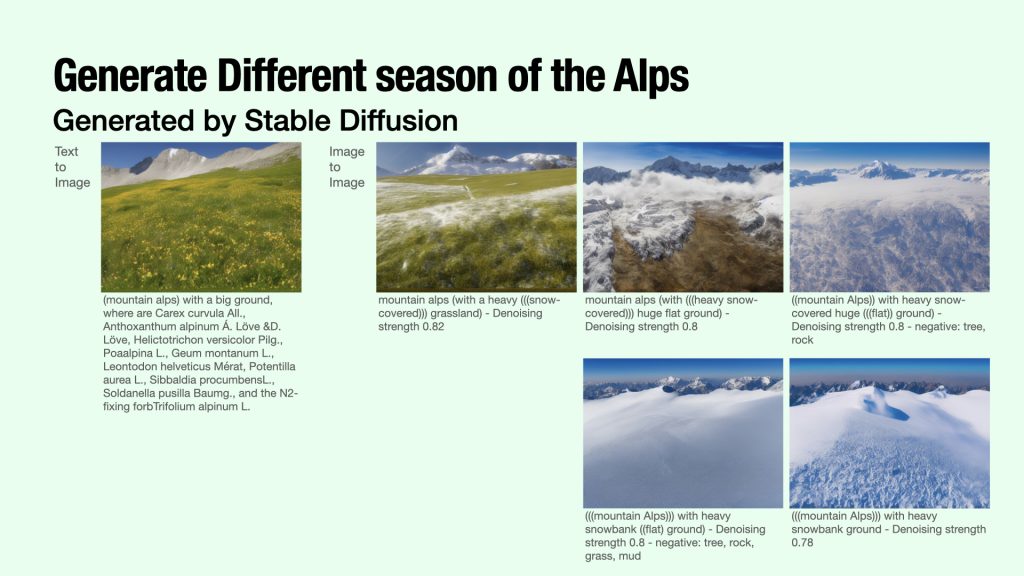
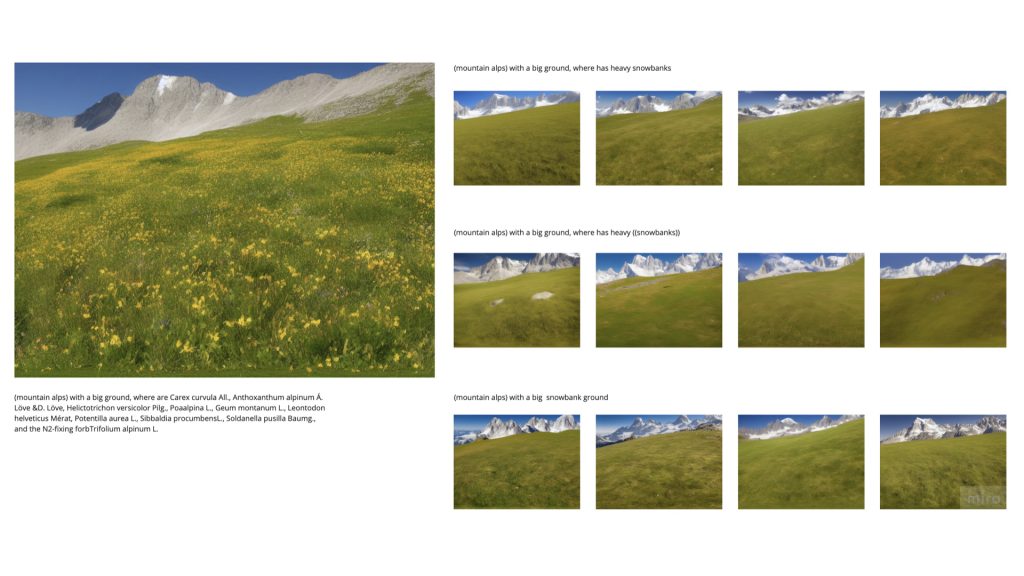
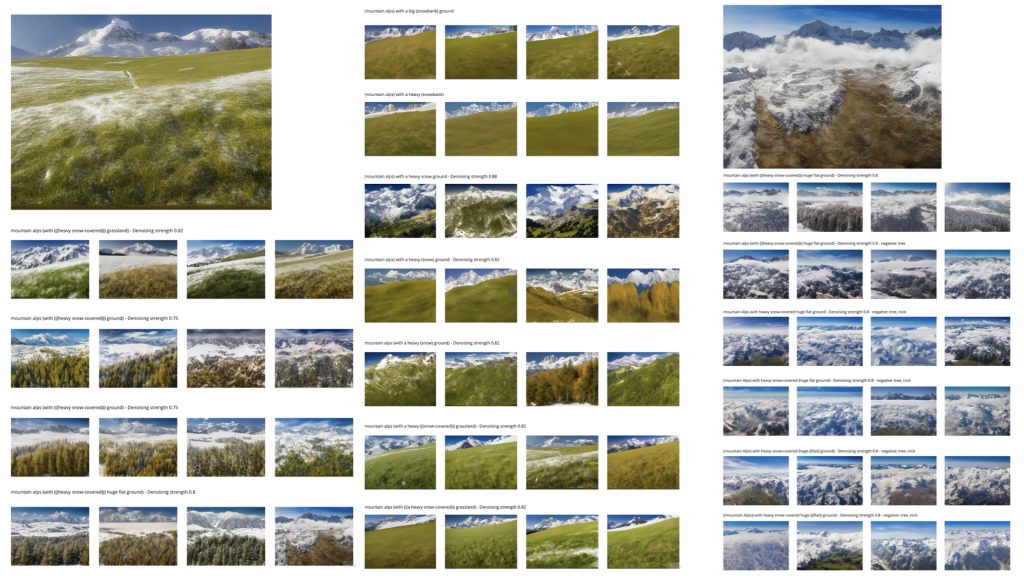
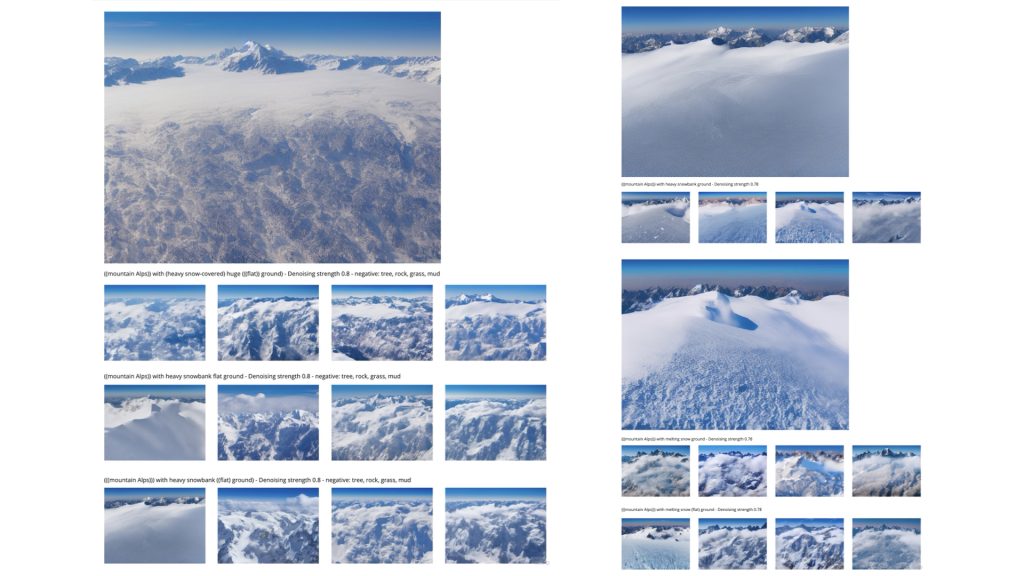
Scientific facts
I would like the changes in plant life to be based on scientific realism. Therefore, I attempted to infer the timing of snowmelt, flowering, and snowfall each year from the content provided in research papers. Based on these timings, I created the video to accurately depict the seasonal changes in the plant life.
Video making
Calculate the frame number
I will compile the data from the previous stage into a table, organized according to the information required for video production.
Video Making
Next, I will utilize Stable Diffusion inpainting to modify the state of the grassland based on the generated images from the previous stage. I will start by creating images for different seasons and then proceed to craft images depicting the transition between states. By adjusting the Denoising strength, I can control the intensity of the changes. This allows me to create the desired gradient.
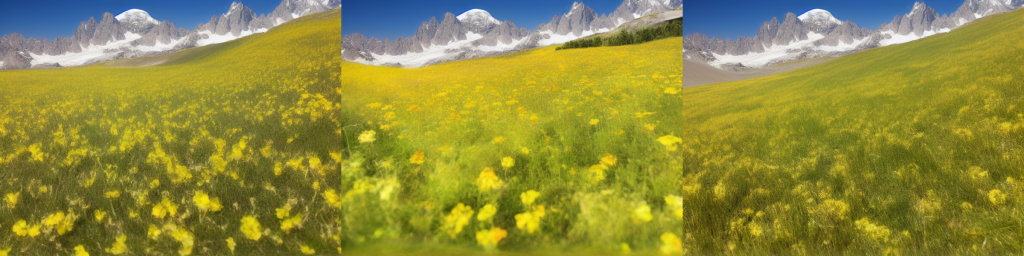
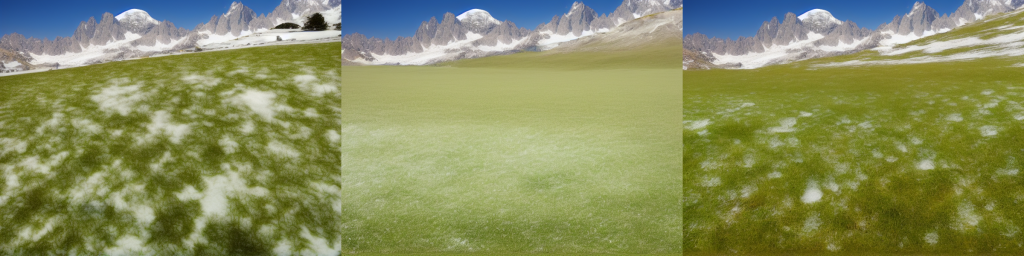
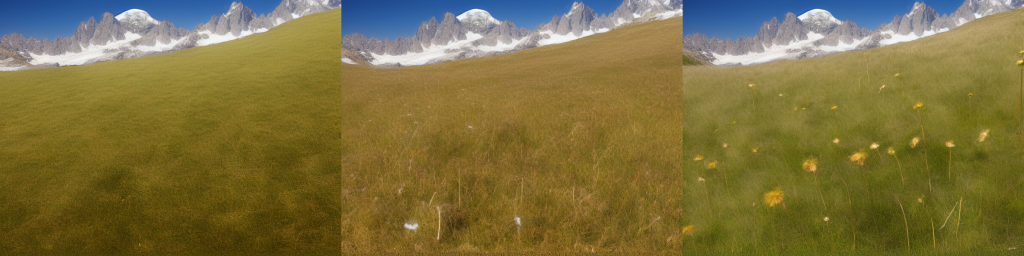
Finally, I will place the images at their respective time points based on the research data.